

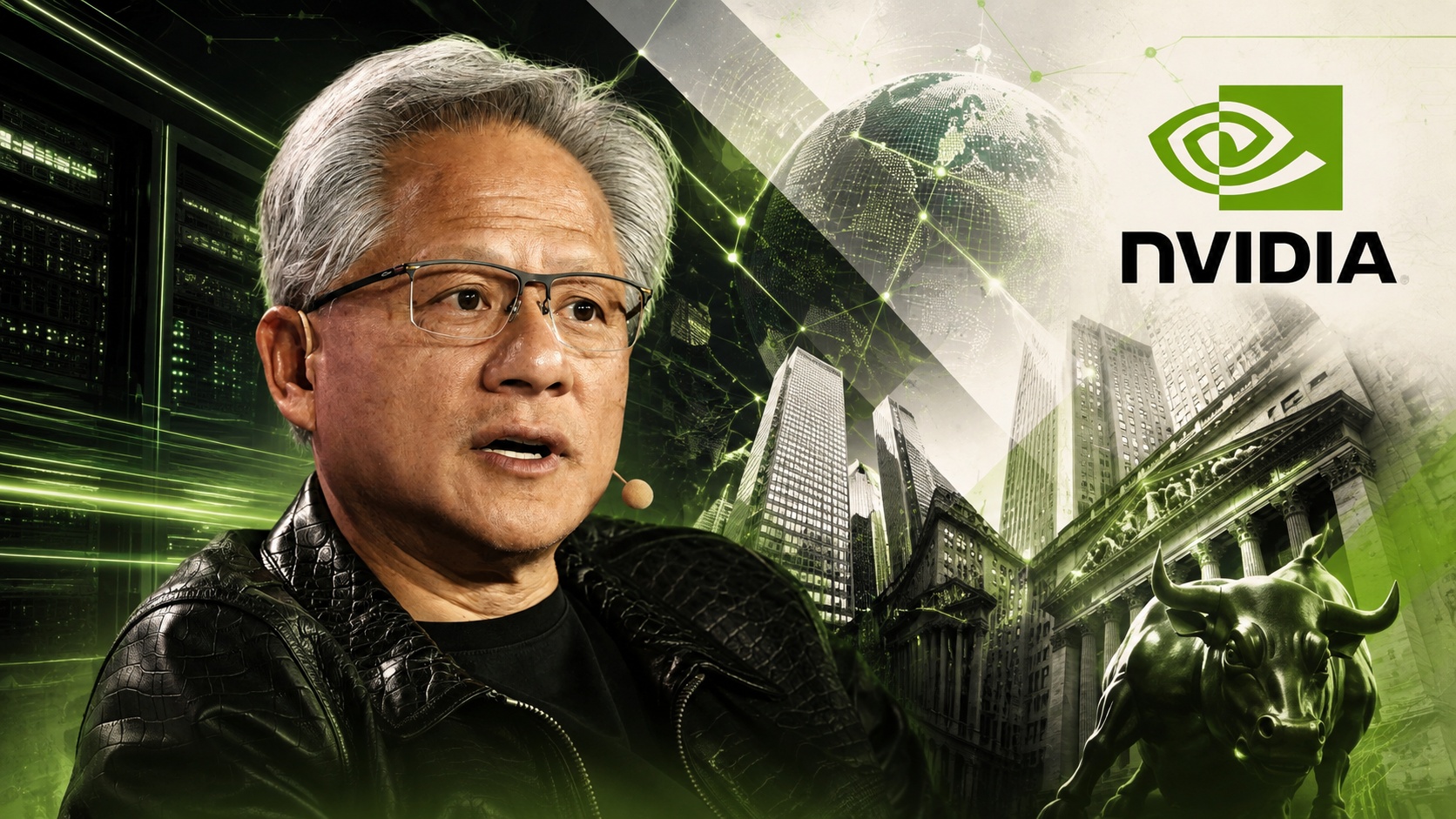
Nvidia will assemble more than US$500 billion in financing for AI chips, power and data centres with six of the largest names in American finance, the company announced on Monday, hours after the Financial Times first reported the talks. Apollo Global Management, BlackRock, Blackstone, Brookfield, Goldman Sachs and KKR signed memorandums of understanding to build the Nvidia $500 billion AI financing program, which is meant to fund customers buying Nvidia hardware without loading debt onto their own balance sheets.
The partners plan to establish funding vehicles that let outside investors back data centres and collect a share of the income those facilities generate. Nvidia may invest alongside them, covering up to 25 per cent of an individual data centre’s cost, according to Trustnet. The scale and the individual deal structures are still being settled, and the memorandums carry no binding commitments. The capital is aimed at hyperscalers and frontier AI labs that need to build data centres and buy hardware faster than their own borrowing capacity allows.
Chief executive Jensen Huang presented the arrangement as a change in how the industry pays for computing. “This is really the first time that technology chips have become an investable asset class. These are revenue-generating assets now,” he told CNBC on Monday. “The computer is now part of the infrastructure, like electricity, like the internet,” he said.
The financiers used similar language. BlackRock chief executive Larry Fink called the model “the next future for financial engineering” and compared it to the creation of mortgage-backed securities in the 1970s. Blackstone president Jon Gray said AI compute would become a “financeable asset class,” with lenders assessing chips the way mortgage providers assess homes. Apollo president Jim Zelter said his firm would bring its “flexible, long-term capital base” to the program.
Investors were less certain. Nvidia shares closed down 2.86 per cent at US$217.55 on Monday, and the deal revived a familiar objection: Nvidia has repeatedly put money into companies that then spend it on Nvidia chips. Bloomberg reported on 27 July that roughly US$750 billion in deals linked to the company had already renewed circular financing fears among analysts and investors.
“Nvidia’s plan to help mobilise up to $500bn for new AI infrastructure is a powerful sign of its ambition, but it will also sharpen concerns about circular financing,” said Matt Britzman, senior equity analyst at Hargreaves Lansdown. He added that Nvidia expects “a relatively passive role, with independent investors assessing each opportunity.”
Others read the deal as a demand signal. “It signals plenty of institutional demand still out there for the AI buildout, which is a positive for stocks,” said Neil Wilson, investor strategist at Saxo UK. The program, he said, helps secure “Nvidia as the dominant infrastructure partner for firms that want to tap AI.”
Some of that money is already reaching Australia. Sydney’s Firmus announced a fully subscribed US$2 billion equity raise on 7 August from Coatue, Nvidia, Blackstone Tactical Opportunities and Jane Street, valuing the company above US$10.5 billion and funding its Project Southgate AI factories across Australia, with Indonesia next. “This investment allows us to move on multiple fronts at once. We’re scaling across Australia while fast-tracking our capacity to expand into the wider Asia-Pacific region,” Firmus chief executive Oliver Curtis said.
Facilities financed this way in Australia will also have to satisfy the mandatory data centre rules Canberra plans to legislate in early 2027, which require large sites to generate as much power as they consume.
The financing partners have not said when the first vehicles will open to investors or which customers will draw on them first. Bank of America analyst Vivek Arya kept Nvidia as a “top pick” with a US$350 price target after the announcement, and expects second quarter revenue of US$94 billion to US$95 billion against the company’s US$91 billion guidance. A nearer test of the spending behind the program comes on 26 August, when Nvidia reports those results.








