

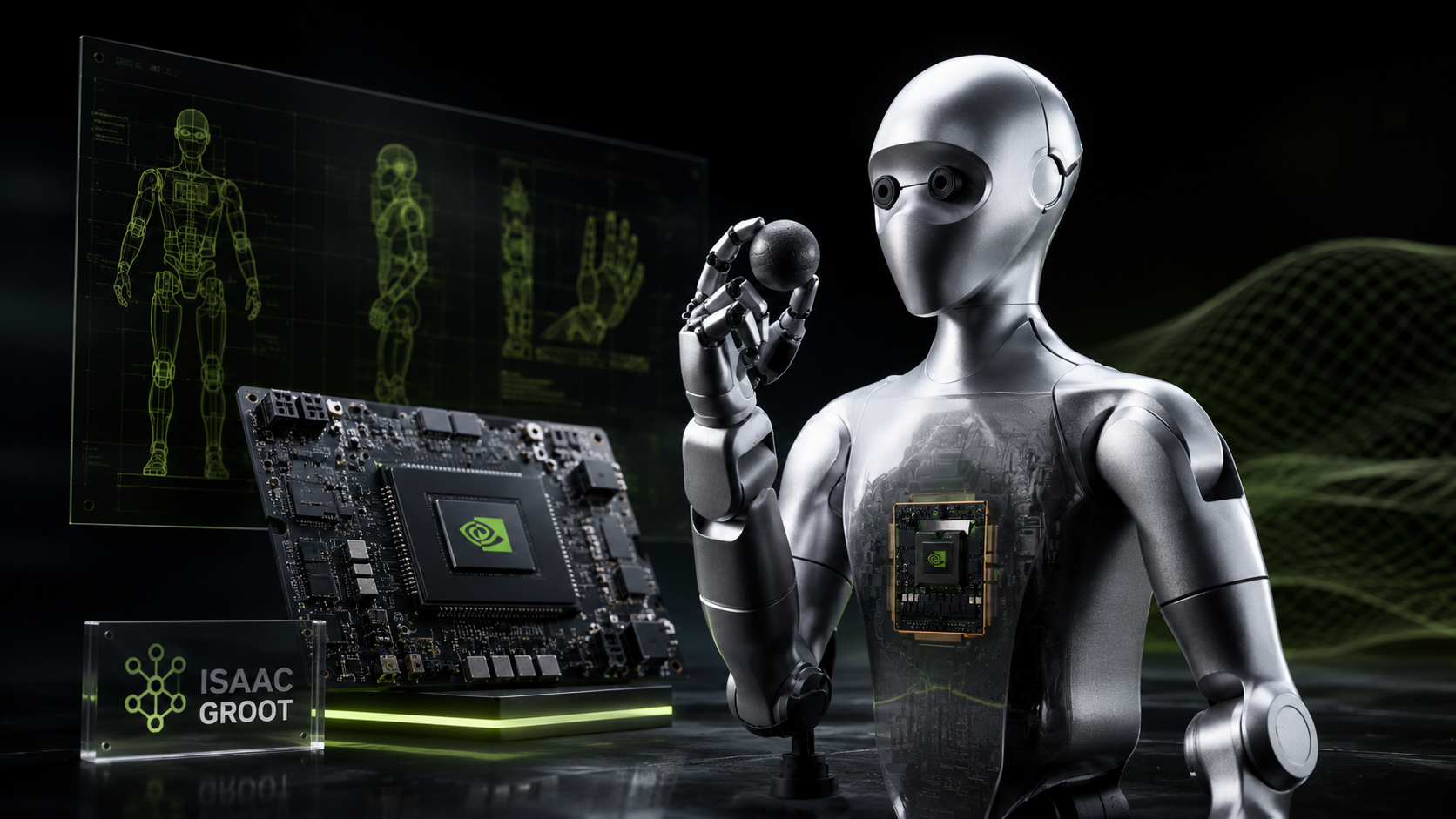
NVIDIA has unveiled the Isaac GR00T, a groundbreaking open humanoid robot reference design aimed at accelerating robotics research across both academic and industrial settings. Featuring dexterous hands and powerful onboard AI capabilities, the platform provides researchers and developers with accessible, advanced hardware paired with an open software stack. By democratizing access to cutting-edge robotics platforms, GR00T fosters innovation in AI-driven humanoids, enabling faster prototyping and more effective collaboration across the global research community. Its open architecture deliberately encourages customization and seamless integration with NVIDIA’s broader AI ecosystem, including the Isaac Sim simulation environment and the Jetson family of computing platforms.
The official launch took place at GTC Taipei, where NVIDIA introduced the Isaac GR00T Reference Humanoid Robot as the first open platform to integrate several best-in-class components into a cohesive whole. The design brings together Unitree’s H2 Plus chassis, Sharpa’s five-fingered hands, and NVIDIA’s Jetson Thor compute, creating a unified system that enables seamless research progression from simulation all the way to real-world deployment. This integration of leading hardware from multiple specialized partners reflects a thoughtful approach to assembling a comprehensive platform that addresses the full spectrum of humanoid robotics development needs.
The technical specifications of the Isaac GR00T Reference Humanoid Robot underscore its capabilities and ambitions. Standing six feet tall with an impressive 75 degrees of freedom, the robot is equipped with stereo cameras and a Blackwell GPU delivering 2,070 FP4 teraflops of computational power. This substantial processing capability supports demanding tasks such as precise manipulation, all while operating on a battery that provides approximately three hours of runtime. These specifications position the platform as a serious tool for advanced research, offering the computational horsepower and physical dexterity necessary to explore the frontiers of embodied artificial intelligence.
The platform’s full-stack design represents one of its most compelling attributes. The NVIDIA Isaac GR00T Reference Humanoid Robot combines the Unitree H2 humanoid robot, Sharpa Wave five-fingered hands for dexterous manipulation, Jetson Thor onboard compute, and the Isaac GR00T open software and models. Together, these elements give researchers a complete platform spanning the entire workflow from data capture through model deployment. This end-to-end approach significantly reduces the barriers that have traditionally complicated humanoid robotics research, allowing teams to focus their energy on innovation rather than on assembling and integrating disparate components from scratch.
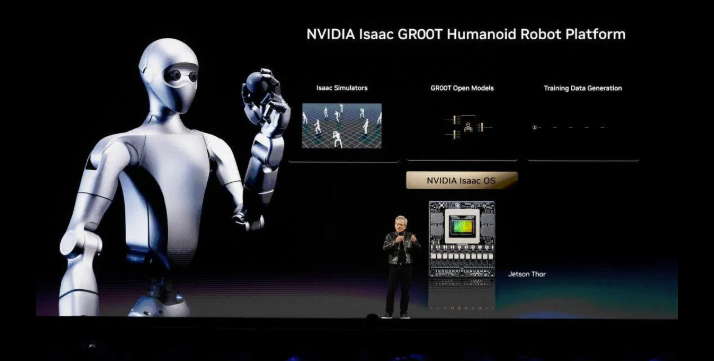
The platform has already attracted attention from prestigious research institutions, signaling strong confidence in its potential to advance the field. Leading labs including the Stanford Robotics Center and ETH Zurich are already adopting the system, lending considerable credibility to NVIDIA’s vision. Reflecting on the broader significance of the initiative, NVIDIA CEO Jensen Huang has described the GR00T platform as a pathway to multitrillion-dollar physical AI opportunities, framing the technology not merely as a research tool but as a foundational step toward a vast emerging market centered on embodied intelligence and autonomous physical systems.
Looking toward the future, units of the Isaac GR00T Reference Humanoid Robot are scheduled to ship from late 2026, marking an important milestone in NVIDIA’s efforts to standardize humanoid robot development. By providing a common, open platform that integrates proven hardware and sophisticated software, NVIDIA aims to establish a shared foundation upon which the broader robotics community can build. This standardization could prove transformative, accelerating the pace of discovery and enabling researchers worldwide to collaborate more effectively, share advances more readily, and collectively push the boundaries of what humanoid robots can achieve. As the platform reaches researchers and developers in the coming year, the Isaac GR00T may well emerge as a defining force in shaping the next era of AI-driven robotics, bringing the long-envisioned promise of capable, intelligent humanoid machines closer to practical reality.








