

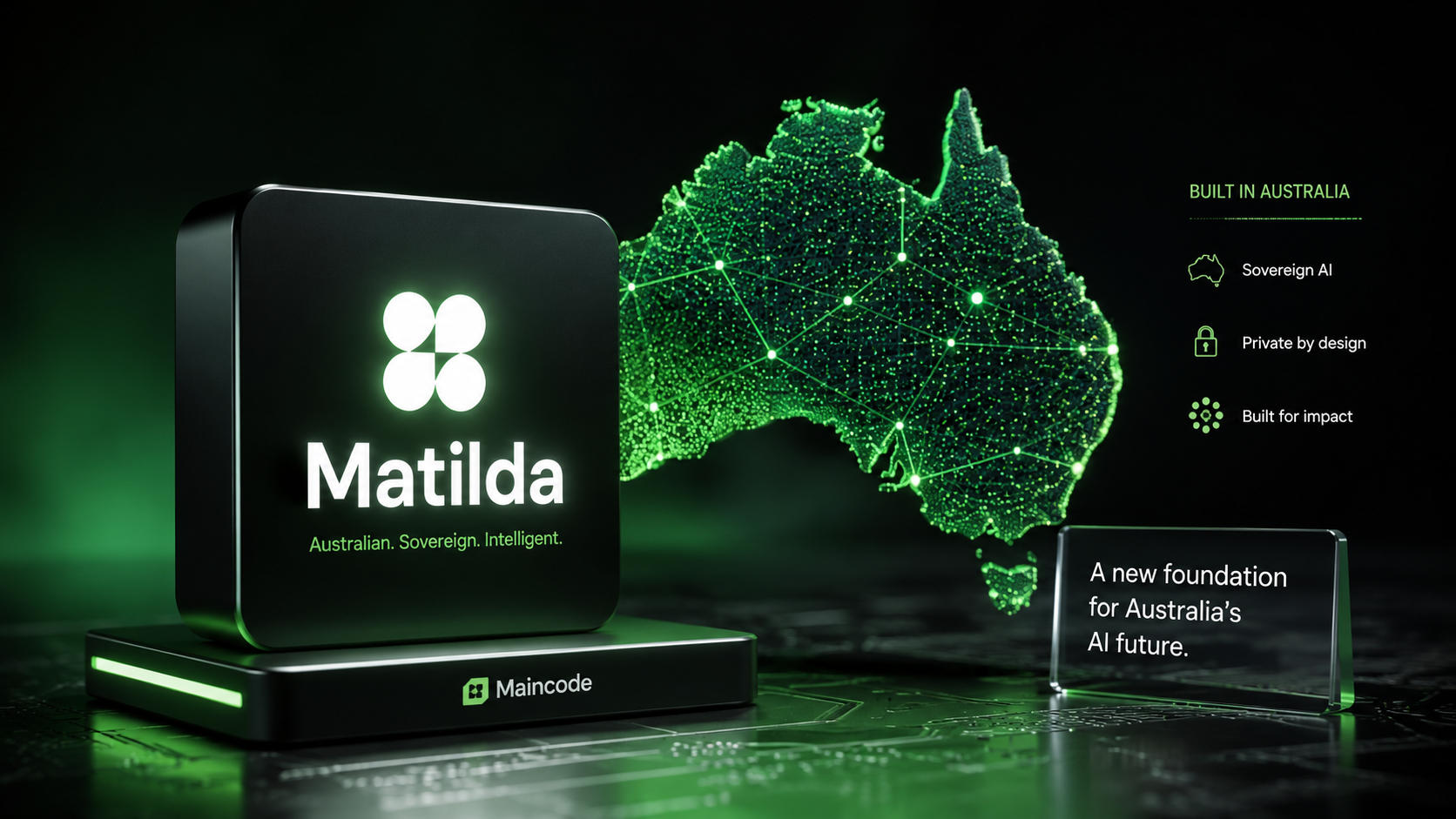
Australia’s artificial intelligence landscape has taken a major local leap with the debut of Matilda, an AI foundation model built by the Melbourne-based technology startup Maincode. Positioned as a homegrown alternative to US-centric models such as OpenAI’s ChatGPT, Matilda represents a notable assertion of technological independence and ambition within Australia’s growing AI sector. Over time, the model has transitioned from its initial buzz as a “sovereign” AI toward being proudly marketed under a more classic and accessible banner: “Australian-made.” This evolution in positioning reflects both the practical realities of building a competitive foundation model and a thoughtful recalibration of how the company wishes to present its work to the public and prospective clients.
A central element of what distinguishes Matilda is its grounding in local context. Unlike generic global chatbots that frequently hallucinate when asked about specific Australian tax laws, education curriculums, or cultural nuances, Matilda was designed from the ground up to address uniquely Australian problems. This deliberate focus on local relevance positions the model as a more reliable and trustworthy tool for Australian users and institutions, who often find that internationally developed AI systems struggle with the particularities of their national context. By prioritizing accuracy in domains specific to Australia, Maincode aims to carve out a meaningful niche where local expertise translates into tangible advantages.
The model’s capabilities were showcased through early proofs of concept that demonstrated its practical potential. Matilda made its public debut at SXSW Sydney, where it displayed its abilities using custom training data drawn from the AFL and AFLW, including player statistics, team histories, and conversational queries. This choice of demonstration material was particularly fitting, as Australian Rules Football occupies a beloved place in the nation’s culture, and the model’s fluency with this distinctly local subject matter served to illustrate its grounding in Australian life in a manner that resonated with audiences.
Beyond conversational abilities, Matilda has already achieved significant agentic milestones that have garnered considerable attention. The model made headlines by executing what Mastercard described as Australia’s first “fully authorized and secured agentic transaction.” In this notable trial, the AI autonomously used a Commonwealth Bank debit card to book movie tickets and look up accommodation in Thredbo. This achievement signals the growing maturity of agentic AI capabilities and demonstrates Matilda’s potential to move beyond simple question-and-answer interactions toward executing real-world tasks on behalf of users, a frontier that many in the industry regard as the next major step in the evolution of artificial intelligence.
Maincode’s strategic vision extends well beyond positioning Matilda as a mass-market chatbot, instead framing it as a core foundational model through what the company describes as an “AI Factory” approach. The company is utilizing a $30 million facility, notably employing AMD chips rather than the more commonly used Nvidia hardware, to build specialized, hybrid AI models for substantial local clients. These clients include major Australian banks and software companies, reflecting a business strategy oriented toward serving enterprise customers with tailored solutions rather than competing directly for consumer attention. This focus on foundational infrastructure and bespoke model development represents a distinctive approach within the competitive AI marketplace, emphasizing depth and specialization over broad market reach.
Perhaps one of the more interesting aspects of Matilda’s story involves the company’s decision to move away from the “sovereign” label that initially defined its public image. When Maincode first announced Matilda, the model was heavily branded as Australia’s first “totally sovereign foundational AI model.” However, CEO Dave Lemphers later walked back that specific terminology, prompting a more nuanced articulation of what the model actually represents. The company clarified that while Matilda is trained in Australia by Australians, it does incorporate high-quality, copyright-free global datasets, such as Project Gutenberg, alongside local data in order to function optimally. This candid acknowledgment reflects an honest recognition of the practical requirements involved in building a capable foundation model, where access to diverse, high-quality training data remains essential regardless of national origin.
In place of the sovereign framing, Maincode has chosen to emphasize the practical benefits of an “Australian-made” AI infrastructure. The company has committed to keeping its data processes outside of US-owned cloud systems in order to protect local intellectual property, a pledge that addresses growing concerns about data sovereignty and the strategic importance of maintaining domestic control over critical technological assets. This positioning allows Maincode to highlight genuine advantages related to data security and national interest without overstating the model’s independence from global resources. As Matilda continues to develop and expand its capabilities, it stands as a compelling example of how nations beyond the established AI powerhouses are working to build technological capacity suited to their own needs, cultures, and priorities. Whether Matilda ultimately succeeds in establishing a durable position within Australia’s AI ecosystem remains to be seen, but its emergence marks a significant moment in the country’s pursuit of homegrown innovation and technological self-determination.








