

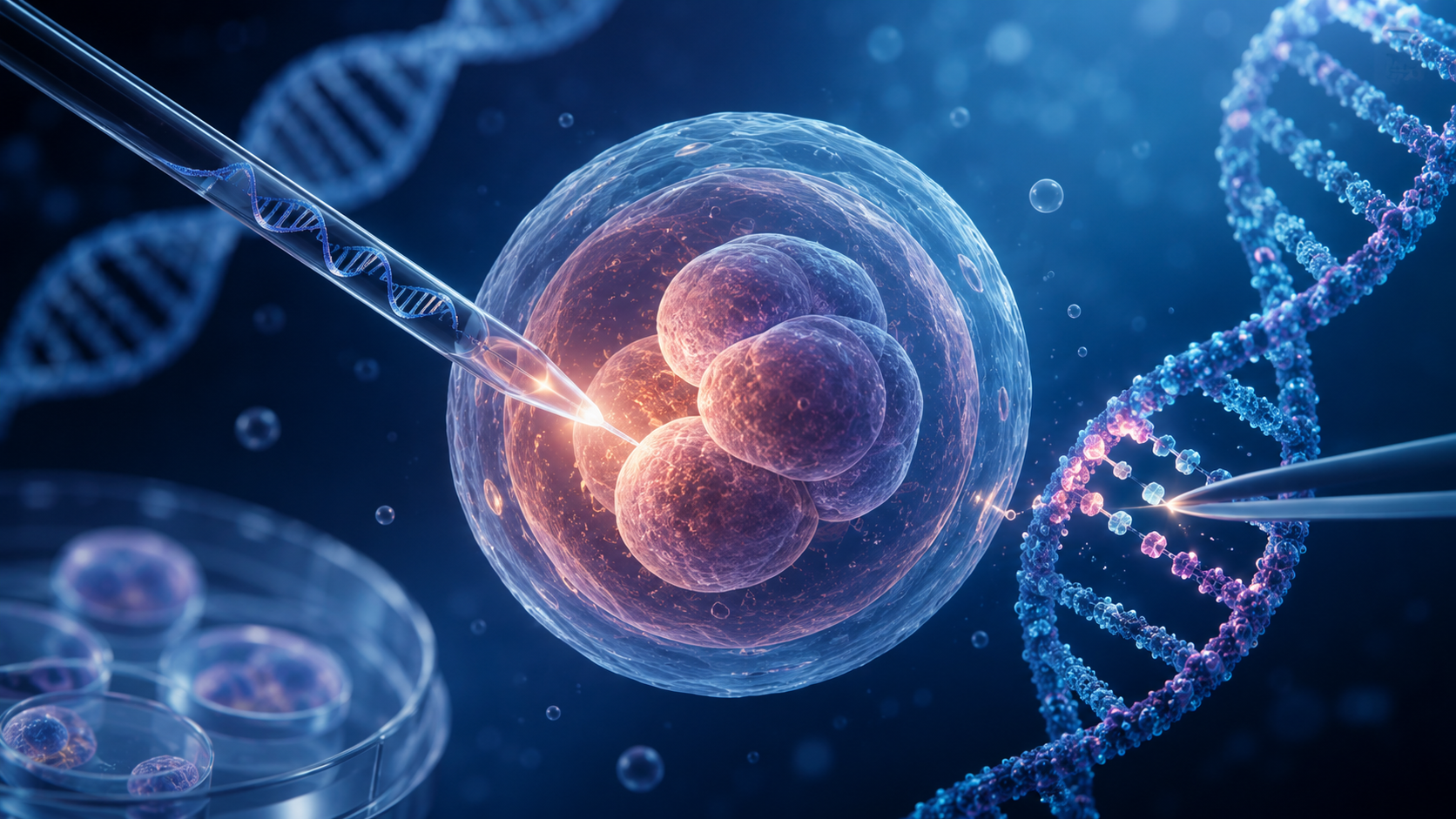
The controversial notion of designing future children in the laboratory appears to have taken a step closer to reality. Researchers at Columbia University say they have used a new “base editing” technique to tweak DNA in early human embryos with far more precision than standard CRISPR, avoiding the large-scale genetic damage often seen with older methods, according to a report in the New York Times. This development marks a noteworthy advance in the rapidly evolving field of genetic engineering, even as it raises profound questions about the ethical, social, and scientific implications of altering the human genome at its earliest stages. The research underscores both the remarkable progress being made in the precision of gene-editing tools and the deep uncertainties that continue to surround their potential applications.
Despite the significance of the technical achievement, the lead scientist behind the work was careful to emphasize its limitations and the need for broad societal reflection. Lead scientist Dieter Egli stressed that the work is nowhere near clinic-ready and called for a public debate on how, or whether, such tools should be used at all. His comments reflected a thoughtful awareness of the weighty considerations at stake, extending well beyond the laboratory and into the realm of public values and collective decision-making. “As a scientist, you can provide the data for discussion, but then essentially there you stop and let others take over,” he told the Times, articulating a measured stance that places the ultimate questions about the technology’s use in the hands of society as a whole rather than the researchers alone.
The specifics of the study illuminate both the promise and the persistent challenges of the technique. The team altered two genes tied to cholesterol levels and fetal hemoglobin and, in some embryos, edited both genes at once, demonstrating the potential of base editing to address multiple genetic targets with notable accuracy. Yet the researchers still encountered significant problems that highlight the immaturity of the technology. Some embryos ended up as “mosaics,” meaning they contained a mix of edited and unedited cells, a condition that could pose health risks if such embryos were ever carried to term. This outcome serves as a sobering reminder that, despite the improvements in precision, considerable scientific hurdles remain before such techniques could be considered safe or reliable for any clinical purpose.
The context surrounding the study’s funding and current status adds further dimension to the picture. The research was funded partly by the embryo-screening company Nucleus Genomics, a detail that reflects the growing commercial interest in technologies related to genetic screening and editing. The study has been posted online and remains under journal review, meaning that its findings have not yet undergone the full scrutiny of formal peer review. This status is important to bear in mind, as it indicates that the work, while significant, is still in the process of being evaluated by the broader scientific community, and its conclusions should be regarded as preliminary pending that assessment.
To appreciate the full weight of these developments, it helps to consider the broader history of the debate over editing the human germline. A previous NPR story offered a big-picture view of the controversy, tracing it back to 2018, when a Chinese scientist “horrified the world” with his unauthorized work creating gene-edited babies, an episode that resulted in his imprisonment and prompted widespread condemnation across the scientific community. That incident crystallized many of the ethical concerns surrounding the technology and established a cautionary precedent that continues to shape discussions to this day. The memory of that episode looms large over current research, serving as a reminder of the potential for such powerful tools to be misused and of the serious consequences that can follow from disregarding ethical norms and regulatory boundaries.
In the years since that pivotal moment, however, the idea of editing human embryos has received renewed momentum from unexpected quarters. The concept has been getting a boost from Silicon Valley venture capitalists and so-called “pro-natalists” who worry about shrinking populations and see genetic technologies as a potential tool for addressing demographic concerns. This emerging interest has injected fresh energy and resources into a field that had been marked by caution and controversy, introducing new stakeholders with distinct motivations and perspectives. The involvement of these groups has contributed to a shifting landscape in which the once largely taboo notion of human germline editing is being discussed with greater openness, though not without continued and significant opposition.
The debate ultimately centers on a fundamental tension between potential benefits and serious risks. Supporters of the technology see a potential way to repair disease-causing mutations in IVF embryos, offering hope to families affected by inherited genetic disorders and presenting the possibility of preventing serious illnesses before birth. Critics, on the other hand, warn of a slippery slope toward trait selection and a modern form of eugenics, expressing concern that the technology could eventually be used not merely to prevent disease but to select for desired characteristics, with troubling implications for equality, diversity, and human dignity. This divide reflects deeply held and often irreconcilable values, ensuring that the conversation around embryo gene editing will remain contentious for the foreseeable future.
As the science continues to advance, the questions raised by this research grow ever more pressing and consequential. The Columbia team’s work demonstrates that the technical capabilities underlying human germline editing are improving steadily, even as the ethical, legal, and social frameworks needed to govern such technologies remain underdeveloped and contested. The call for public debate issued by the researchers themselves underscores the importance of engaging a broad range of voices in determining how humanity should approach these powerful tools. Whether such technologies are ultimately embraced, restricted, or prohibited will depend not only on continued scientific progress but on the collective judgment of societies grappling with some of the most profound questions ever posed by modern science. In the meantime, this latest advance stands as both a testament to human ingenuity and a reminder of the responsibility that accompanies the ability to reshape the very building blocks of life. Given the sensitive nature of this subject, readers seeking to form their own views may wish to follow the ongoing scientific and ethical discussions through reliable and balanced sources as the field continues to evolve.








