

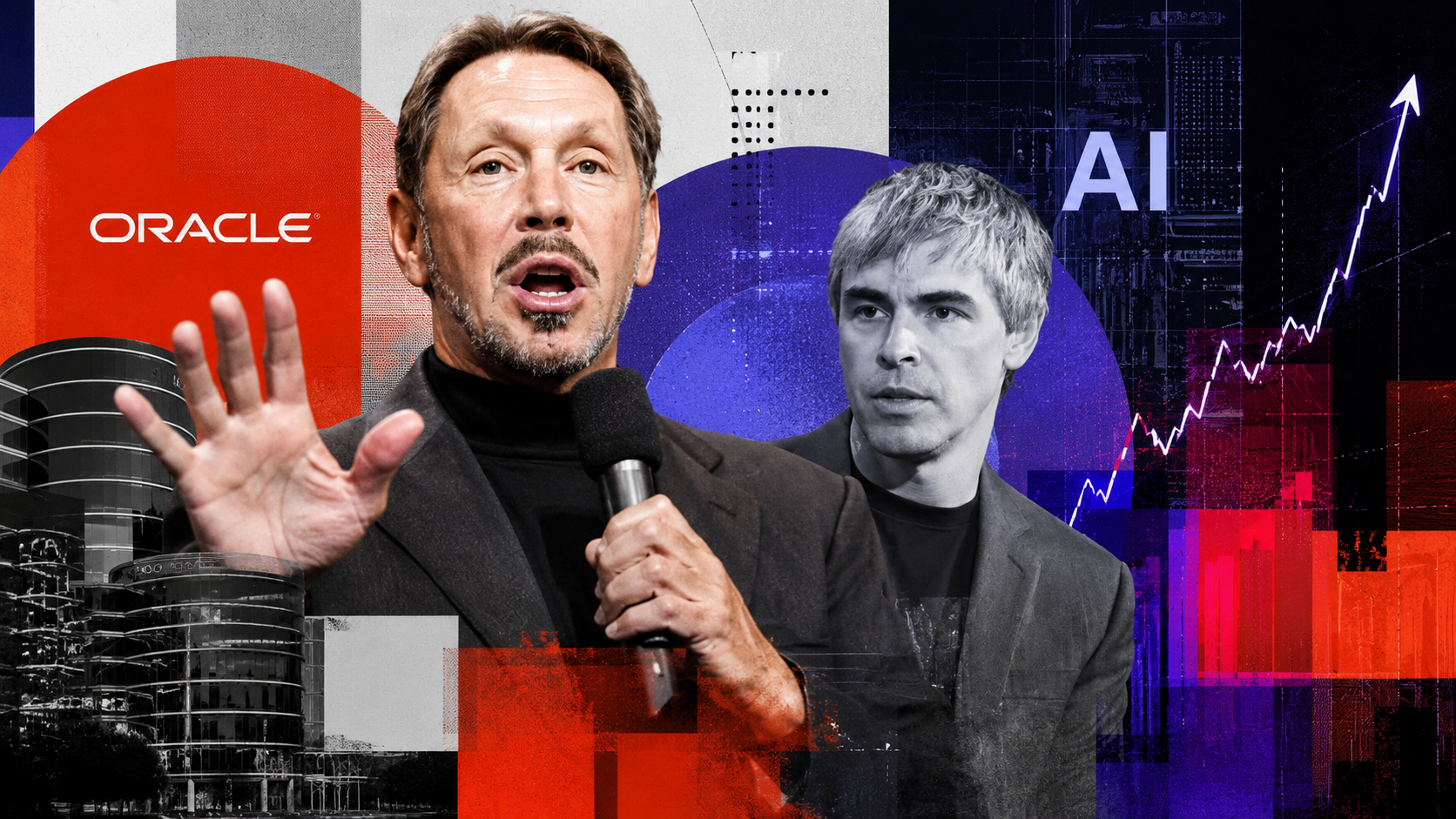
Larry Ellison, the 81-year-old co-founder of Oracle, has vaulted past Google co-founder Larry Page to claim the second spot on the Bloomberg Billionaires Index, with a net worth of $302 billion as of June 2, 2026. This milestone places Ellison behind only Elon Musk, whose fortune stands at roughly $735 billion, and underscores the remarkable financial dynamics unfolding within the technology sector. The ascent reflects far more than a simple reshuffling of the wealthiest individuals; it offers a window into the powerful economic forces being unleashed by the artificial intelligence boom and the way those forces are concentrating extraordinary wealth among those positioned to benefit most directly. As with all reporting on financial matters, the figures cited here reflect a particular moment in time and may shift considerably as markets fluctuate, and nothing in this article should be construed as financial advice.
The move caps a dramatic rebound for Ellison, whose financial standing had deteriorated significantly earlier in the year. As recently as March, he had fallen to sixth place on Bloomberg’s list with a net worth of about $201 billion, following a slump in Oracle shares amid broader market turbulence. Since that low point, however, his fortune has surged by more than $100 billion, a staggering recovery driven primarily by Oracle’s rally as the company cemented its position in AI-driven cloud infrastructure. This swift reversal of fortune highlights both the volatility inherent in wealth tied closely to a single company’s stock and the transformative impact that leadership in AI infrastructure can have on a firm’s market valuation and, by extension, the wealth of its largest shareholders.
The proximate cause of Ellison’s leap up the rankings can be traced to a sharp rise in Oracle’s share price. Oracle’s stock jumped nearly 10 percent on Monday, June 1, closing at $248.15, continuing what analysts called the software sector’s best month since 2001. This rally propelled Ellison’s net worth past the $300 billion mark, allowing him to leapfrog several of his peers in succession, including Jeff Bezos, Sergey Brin, and finally Larry Page. Given that Ellison owns approximately 41 percent of Oracle, the company’s stock movements exert an outsized influence on his personal fortune, magnifying the effects of the rally and illustrating how concentrated ownership can translate market gains into dramatic swings in individual wealth.
Page’s descent from second to third place reflects a broader divergence among technology billionaires tied to the unfolding AI boom. Alphabet shares came under pressure after the company announced plans to raise roughly $80 billion through a stock offering to fund AI investments, a move that raised concerns about dilution and elevated spending levels among investors. The impact on Page’s wealth was immediate and substantial, with his net worth falling by $11.2 billion on June 2 alone. This contrast between Ellison’s gains and Page’s losses encapsulates a fascinating dynamic at the heart of the current technological moment, in which different companies and their leaders experience markedly different fortunes depending on how the market perceives their respective AI strategies.
Indeed, the shift between these two figures illustrates a broader theme in how AI infrastructure spending is reshaping the financial landscape. The enormous investments required to build and operate AI systems are simultaneously enriching those who supply the necessary infrastructure, such as Ellison and Oracle, while weighing on those financing it at high cost, as appears to be the case with Alphabet’s ambitious spending plans. This divergence reveals the complex and sometimes counterintuitive ways in which the AI revolution is distributing financial rewards and risks, favoring suppliers of critical infrastructure even as it pressures those making large capital commitments to fund their AI ambitions. According to Forbes, Ellison recorded the largest individual wealth gain in May, adding $71 billion in a single month, a figure that vividly demonstrates the scale of the gains available to those well positioned within the AI economy.
Ellison’s trajectory throughout 2026 has been anything but linear, reflecting the turbulence that has characterized the broader market and the technology sector in particular. He ended 2025 as the fifth-richest person with a net worth of $247 billion, then briefly topped Musk for a single day in September 2025 when Oracle shares surged more than 40 percent, only to shed nearly 19 percent of his wealth in early 2026 as technology stocks sold off amid geopolitical tensions. This rollercoaster pattern underscores the inherent unpredictability of fortunes built upon concentrated equity holdings, where dramatic gains and steep losses can occur within remarkably short timeframes in response to shifting market sentiment and external pressures.
His return to the number-two position ultimately underscores the outsized influence that a single stock can exert on the billionaire rankings when ownership concentration is as high as it is in Ellison’s case. With more than 40 percent of Oracle under his control, Ellison’s personal wealth is inextricably linked to the company’s performance, making him a vivid example of how the fortunes of the ultra-wealthy can rise and fall in tandem with the companies they founded and continue to hold. This phenomenon highlights both the rewards and the risks of such concentrated ownership, illustrating the extraordinary leverage it provides while also exposing the holder to significant volatility.
Taken together, Ellison’s reascent to the second spot on the global wealth rankings offers a compelling illustration of the broader economic narrative surrounding artificial intelligence and its profound impact on the technology industry. His story captures the way in which the AI boom is creating immense wealth for those who provide the foundational infrastructure powering the revolution, while simultaneously introducing new uncertainties for companies and individuals navigating the costs of competing in this rapidly evolving arena. As the AI sector continues to mature and the competition among technology giants intensifies, the fortunes of figures like Ellison and Page will likely continue to shift in response to market developments, strategic decisions, and the ever-changing perceptions of investors. For those observing these dynamics, the contest at the top of the billionaire rankings serves as a striking barometer of the forces shaping the future of technology and the distribution of wealth in an age increasingly defined by artificial intelligence.








