

No Result
View All Result
Techord
Subscribe
  • AI
  • Tech
  • Robotics
  • Science
  • Gadgets
  • AI
  • Tech
  • Robotics
  • Science
  • Gadgets
No Result
View All Result
No Result
View All Result
Techord
Subscribe
Home Tech

Optus Satellite Life Extension Mission Completes First Phase

Aman Chamlagain by Aman Chamlagain
August 26, 2026
in Tech, Science
0
Optus Satellite Life Extension Mission Completes First Phase
0
SHARES
9
VIEWS
Share on FacebookShare on Twitter

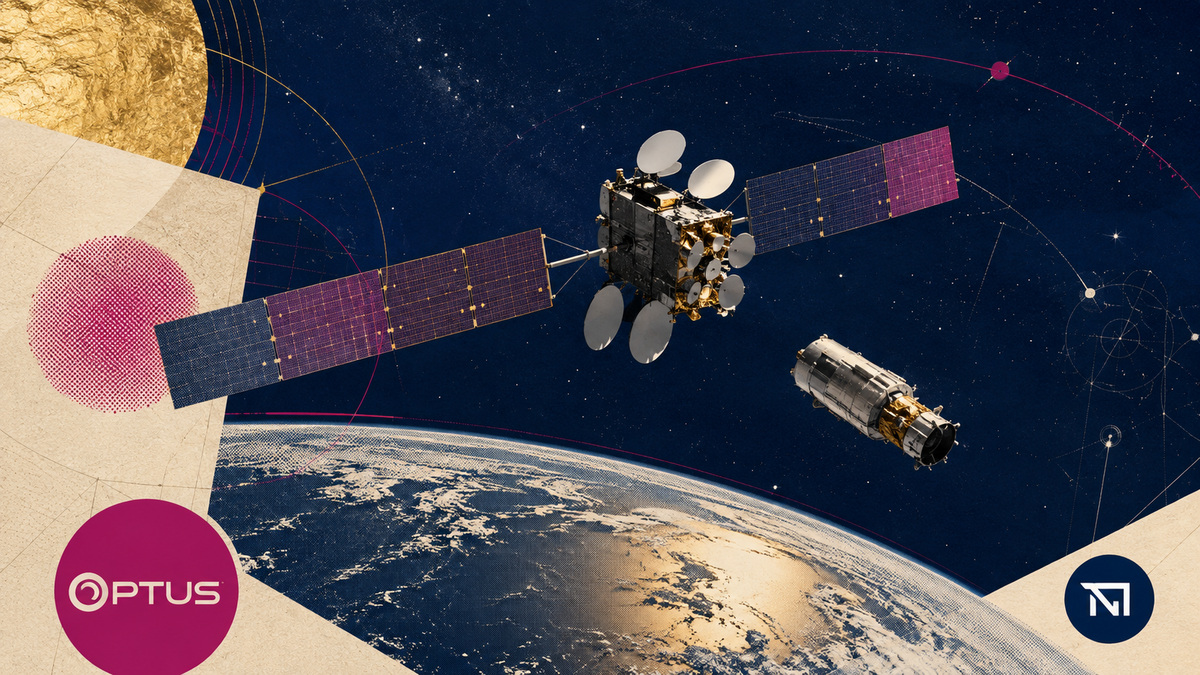
Optus and Northrop Grumman have completed the first phase of Project Aurora, a life extension program for the Optus satellite D3, after a Mission Extension Vehicle undocked from the geostationary communications spacecraft, the companies said in statements released on Tuesday.

The undocking closes out more than a year of on-orbit support. Northrop Grumman’s Mission Extension Vehicle docked with D3 in May 2025 and has provided propulsion and attitude control ever since, keeping the geostationary satellite delivering capacity across Australia and the Asia Pacific while the next stage of the mission was prepared.

That next stage is already in space. Northrop Grumman’s Mission Robotic Vehicle and the Mission Extension Pod launched on a SpaceX Falcon 9 on 21 July, and the robotic vehicle is due to install the pod on D3 in late 2027. Once fitted, the pod is expected to extend the satellite’s working life by up to six years, keeping services running into the 2030s.

The robotic vehicle is built for far more than one job. Spaceflight Now described it as a novel robotic servicing spacecraft beginning a decade-long mission in the geostationary belt, where it can install pods on multiple ageing satellites for different customers over its life.

Our Mission Extension Vehicle 1 successfully undocks from an @Optus satellite, showcasing a new era of satellite servicing that extends mission life and enhances space sustainability. Learn more:https://t.co/530V2GKkyE pic.twitter.com/c6z2WrEcST

— Northrop Grumman (@NGCNews) August 13, 2026

“These milestones demonstrate how innovative technologies can maximise the value of existing satellite assets while supporting long-term service continuity for customers,” said Harvey Wright, Optus executive general manager for satellite, who leads the division operating the carrier’s geostationary fleet.

The arrangement splits the roles between the two companies. Northrop Grumman operates the robotic servicing vehicle and brings the servicing expertise, while Optus owns and will control the extension pod attached to its satellite.

That ownership structure matters for the Australian operator. Controlling the pod means Optus manages the extended life of D3 with its own team, rather than outsourcing the satellite’s future to a foreign contractor, an approach the company presents as part of building sovereign space capability.

Northrop Grumman’s SpaceLogistics unit remains the only company to have docked commercial servicing spacecraft with satellites in geostationary orbit. Its two earlier Mission Extension Vehicles docked with Intelsat satellites in 2020 and 2021, and the pod design now flying is its lighter, cheaper successor.

For Northrop Grumman, the mission extends a servicing record that began with the first commercial satellite docking in 2020. “Our decade of proven experience in satellite servicing shows that mission-extension technology is here,” said Cassie Wong, the company’s director of logistics and servicing.

Life extension changes the economics of satellites like D3, which has been in orbit since 2009. Geostationary satellites usually retire not because their electronics fail but because they exhaust the fuel needed to hold position, and a replacement spacecraft costs hundreds of millions of dollars and takes years to build and launch.

The Mission Extension Pod approach deals with that directly. The small module attaches to the satellite and takes over station-keeping propulsion, while the satellite’s own systems keep carrying traffic uninterrupted, just as D3 kept serving customers through the year of MEV support.

Servicing also defers the disposal question. Rather than moving D3 to a graveyard orbit and launching a replacement, the pod keeps one existing spacecraft productive, an approach Optus presents as a more sustainable way to run satellite fleets.

The mission also gives Australia a rare position in a young market. Optus has operated Australian communications satellites since the 1980s, and Project Aurora makes it one of the first commercial operators anywhere to buy robotic on-orbit servicing rather than replace a spacecraft.

The Mission Robotic Vehicle and pod will spend the coming months raising their orbit toward the geostationary belt. Docking with Optus D3 is scheduled for late 2027.

Tags: Australian space industryNorthrop GrummanOptusProject AurorasatellitesspaceSpaceX
Aman Chamlagain

Aman Chamlagain

Aman Chamlagain is the founder and editor of Techord, the Australian technology news site he started in 2026. He writes across the site's coverage of artificial intelligence, robotics and consumer tech, with a consistent interest in what global technology decisions mean for people living and working in Australia. His reporting tends to follow the same thread: the distance between what a company announces and what actually ships, and who carries the cost of that gap. He covers the major AI labs and the models they release, robotics as it moves from demonstration into real work, and the hardware readers are weighing up buying. He also sets Techord's editorial standards, including its rules on primary sourcing, verbatim quotes and disclosed AI use. Aman handles tips, corrections and pitches personally. He can be reached at amannchamlagai07@gmail.com.

  • Trending
  • Comments
  • Latest
SpaceX IPO Draws $150 Billion in Demand, Doubling Its Target Ahead of Historic Debut

SpaceX IPO Draws $150 Billion in Demand, Doubling Its Target Ahead of Historic Debut

September 5, 2026
Apple Appoints New Leader to Advance Non-Invasive Blood Glucose Monitoring Project

Apple Appoints New Leader to Advance Non-Invasive Blood Glucose Monitoring Project

August 14, 2026
Bosch Partners with UK Startup Humanoid to Manufacture HMND 01 Robots at Scale

Bosch Partners with UK Startup Humanoid to Manufacture HMND 01 Robots at Scale

September 8, 2026
Nvidia CEO Jensen Huang Says Field of Study Won’t Matter in the AI Era

Nvidia CEO Jensen Huang Says Field of Study Won’t Matter in the AI Era

August 14, 2026
Nvidia CEO Jensen Huang Says Field of Study Won’t Matter in the AI Era

Nvidia CEO Jensen Huang Says Field of Study Won’t Matter in the AI Era

0
Apple Appoints New Leader to Advance Non-Invasive Blood Glucose Monitoring Project

Apple Appoints New Leader to Advance Non-Invasive Blood Glucose Monitoring Project

0
BYD Launches Dolphin G DM-i, Its First Vehicle Designed Exclusively for Europe

BYD Launches Dolphin G DM-i, Its First Vehicle Designed Exclusively for Europe

0
Hyundai Launches Atlas Robot World Cup Campaign Ahead of Massive 25,000-Unit Factory Rollout

Hyundai Launches Atlas Robot World Cup Campaign Ahead of Massive 25,000-Unit Factory Rollout

0
Editorial collage of Singapore's waterfront skyline with a schematic link between Singapore and Australia.

Australian AI Companies Target Singapore’s Enterprise Market

October 15, 2026
Editorial illustration of an Arkeus Warden sensor with a separate Drone Forge portfolio aircraft in the background.

Drone Forge and Arkeus Explore New Sensing Capabilities for Autonomous Aircraft

October 15, 2026
Editorial collage of Kingswood railway station and a Hume Highway bridge with restrained amber monitoring motifs.

NSW Trials Smart Sensors to Detect Danger on Railways and Highways

October 15, 2026
Editorial montage of CSIRO's yellow uncrewed survey vessel on coastal water and seagrass in murky water below.

Australian Researchers Trial Robots to Map Seagrass in Murky Water

October 15, 2026

Recent News

Editorial collage of Singapore's waterfront skyline with a schematic link between Singapore and Australia.

Australian AI Companies Target Singapore’s Enterprise Market

October 15, 2026
Editorial illustration of an Arkeus Warden sensor with a separate Drone Forge portfolio aircraft in the background.

Drone Forge and Arkeus Explore New Sensing Capabilities for Autonomous Aircraft

October 15, 2026
Editorial collage of Kingswood railway station and a Hume Highway bridge with restrained amber monitoring motifs.

NSW Trials Smart Sensors to Detect Danger on Railways and Highways

October 15, 2026
Editorial montage of CSIRO's yellow uncrewed survey vessel on coastal water and seagrass in murky water below.

Australian Researchers Trial Robots to Map Seagrass in Murky Water

October 15, 2026
Techord

Techord: Australian technology news.

Techord is an Australian technology publication covering AI, robotics, science, gadgets and electric vehicles, with news and context for Australian readers.

Browse Categories

  • AI

Recent News

Editorial collage of Singapore's waterfront skyline with a schematic link between Singapore and Australia.

Australian AI Companies Target Singapore’s Enterprise Market

October 15, 2026
Editorial illustration of an Arkeus Warden sensor with a separate Drone Forge portfolio aircraft in the background.

Drone Forge and Arkeus Explore New Sensing Capabilities for Autonomous Aircraft

October 15, 2026
  • About Techord
  • Contact
  • Privacy Policy
  • Terms
  • Submit a Tip

© 2026 Techord. All rights reserved.

Welcome Back!

Login to your account below

Forgotten Password?

Retrieve your password

Please enter your username or email address to reset your password.

Log In
No Result
View All Result
  • Home
  • AI
  • Robotics
  • Science
  • Future Tech
  • Big Tech
  • Latest News

© 2026 Techord. All rights reserved.


