

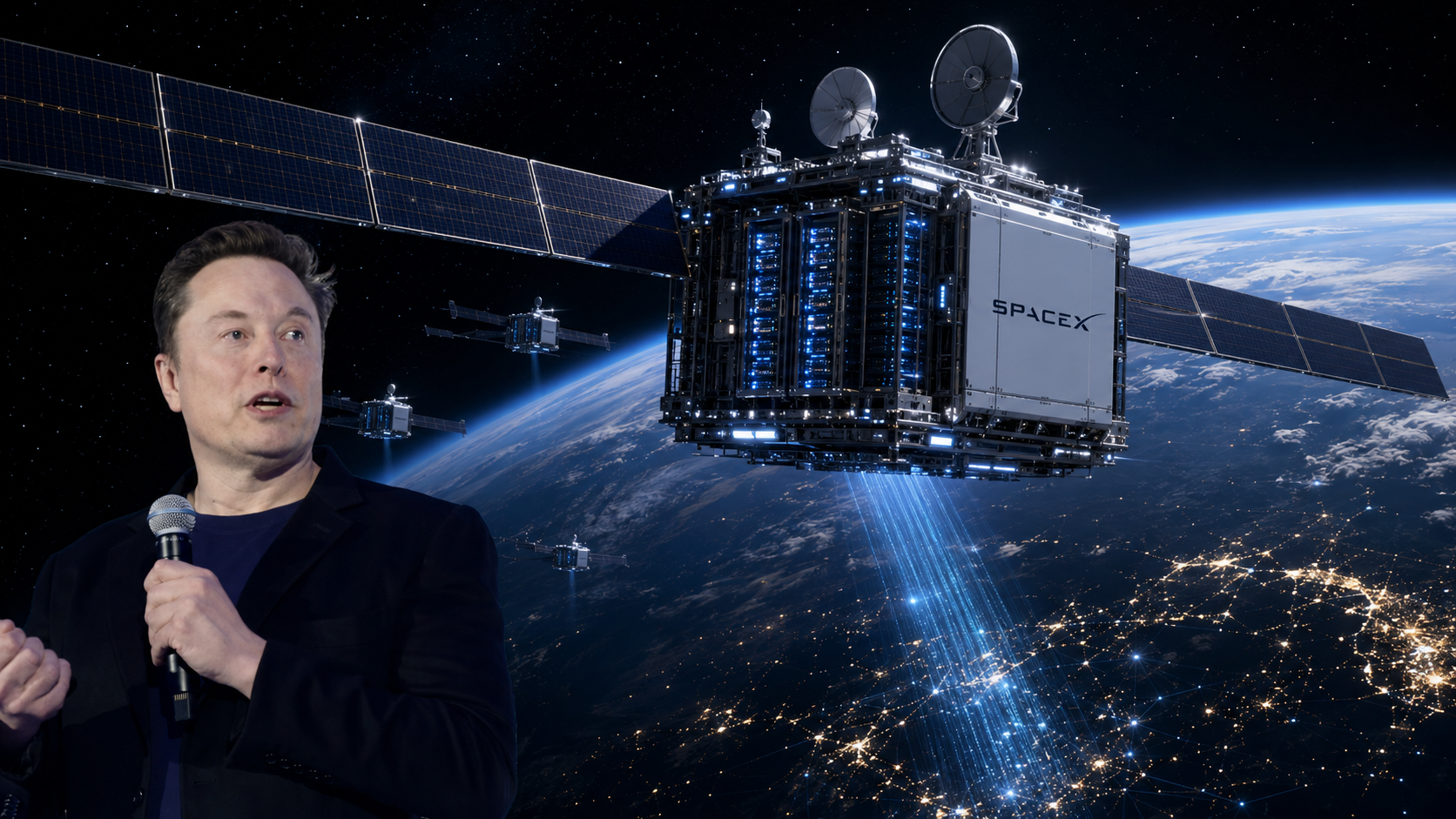
SpaceX has unveiled an audacious vision that fuses two of the defining technological stories of the era, outlining plans to build artificial intelligence data centers in orbit as it prepares for what could be a record-setting initial public offering. According to reports based on investor presentations featuring company president Gwynne Shotwell and chief financial officer Bret Johnsen, SpaceX aims to demonstrate space-based AI computing capabilities by late 2027, somewhat ahead of the timeline disclosed in its IPO filing. The orbital-compute project sits at the center of the company’s long-term pitch to investors as it seeks to raise some 75 billion dollars, a figure that would rank among the largest public offerings ever undertaken.
The ambition behind the project is striking in both its scale and its novelty. SpaceX has reportedly requested regulatory permission to launch up to one million space-based data-center satellites, and it has set a goal of reaching an annualized rate of one gigawatt of space-based AI computing capacity by the end of 2027. The company has claimed in its IPO documents to be the only firm with a commercially viable path to building orbital AI computing at scale, a bold assertion that, if borne out, would position SpaceX at the intersection of the booming demand for AI infrastructure and its own established dominance in launching payloads into space. The first AI satellite would reportedly rely on Nvidia chips, with computing power comparable to a high-end Nvidia server rack.
The logic of moving AI computing into orbit, while unconventional, rests on a set of genuine considerations. Data centers on Earth face mounting constraints related to power supply, cooling, water use, and land, challenges that have become increasingly apparent as the AI buildout accelerates and that have drawn growing public and regulatory scrutiny. In space, abundant solar energy and the natural cold of the orbital environment could in principle address some of these constraints, offering plentiful power and cooling without competing for terrestrial resources. For a company with unmatched capacity to launch hardware into orbit, the prospect of relocating some of the most resource-intensive infrastructure of the AI era beyond Earth holds a certain strategic appeal.
Yet the formidable difficulty of the undertaking should not be underestimated, and a healthy measure of skepticism is warranted. Building and operating data centers in space would entail solving an array of daunting technical challenges, from launching and assembling vast numbers of satellites to maintaining and repairing complex computing hardware in an unforgiving environment where physical access is effectively impossible. The economics, too, remain deeply uncertain, since the costs of such an endeavor are enormous and the practical advantages over continually improving terrestrial data centers have yet to be demonstrated. Ambitious timelines in both the space and AI industries have frequently proven optimistic, and SpaceX’s targets should be viewed with that history in mind.
The placement of the orbital-compute vision at the heart of SpaceX’s IPO pitch is itself revealing of how the company seeks to be valued. By presenting space-based AI infrastructure as a central pillar of its future, SpaceX is inviting investors to assess it not merely as a launch provider or satellite operator but as a participant in the AI infrastructure boom that has driven so much recent market enthusiasm. This framing aligns the company with one of the most powerful investment narratives of the moment, though it also ties its valuation to the successful execution of an unproven and exceptionally challenging concept, raising the stakes of the offering considerably.
The convergence of the space economy and the artificial intelligence boom that SpaceX’s plan represents is emblematic of a broader pattern in which the appetite for AI computing is reshaping ambitions across multiple industries. As demand for the infrastructure that supports AI continues to grow, companies are exploring increasingly unconventional approaches to meeting it, and the notion of orbital data centers, however speculative, reflects the scale of the resources that the technology is thought to require. Whether this particular vision proves prescient or overreaching, it illustrates how thoroughly the pursuit of AI capability is driving exploration at the frontiers of what is technologically conceivable.
For now, SpaceX’s orbital AI computing ambitions remain a plan rather than a reality, dependent on a demonstration not expected until late 2027 and on the resolution of profound technical and economic questions. The vision is genuinely bold, and should it succeed, it could open an entirely new chapter in both space infrastructure and AI computing. A prudent assessment, however, recognizes that the gap between an inspiring presentation to investors and a functioning constellation of orbital data centers is vast, and that the coming years will reveal whether this striking idea can be translated into a workable and economically sound enterprise.








