

No Result
View All Result
Techord
Subscribe
  • AI
  • Tech
  • Robotics
  • Science
  • Gadgets
  • AI
  • Tech
  • Robotics
  • Science
  • Gadgets
No Result
View All Result
No Result
View All Result
Techord
Subscribe
Home Tech

Amazon Unveils Next-Generation Proteus Robot That Takes Spoken Orders in €10 Billion European Push

Aman Chamlagain by Aman Chamlagain
August 14, 2026
in Tech
0
Amazon Unveils Next-Generation Proteus Robot That Takes Spoken Orders in €10 Billion European Push
0
SHARES
2
VIEWS
Share on FacebookShare on Twitter

Amazon on Thursday introduced an upgraded autonomous warehouse robot that employees can direct using everyday conversational language, marking a significant advancement in the integration of artificial intelligence into industrial operations. The announcement forms part of a more than €10 billion investment plan to expand and modernize the company’s fulfillment operations across Europe, signaling Amazon’s deepening commitment to the continent as a hub for operational innovation. This combination of cutting-edge robotics and substantial financial investment reflects the company’s vision for the future of warehouse logistics and its determination to remain at the forefront of automation technology.

The e-commerce giant showcased the next-generation Proteus at its “Delivering the Future” event held at its Dartford fulfillment center east of London. The event served as a platform for several major announcements, including plans to add 25,000 jobs to Amazon’s European workforce and a global commitment of $1 billion to its Career Choice employee upskilling program. This pairing of advanced automation with significant investment in human talent illustrates a nuanced approach to the future of work, one that seeks to balance technological progress with ongoing investment in the company’s employees and their professional development.
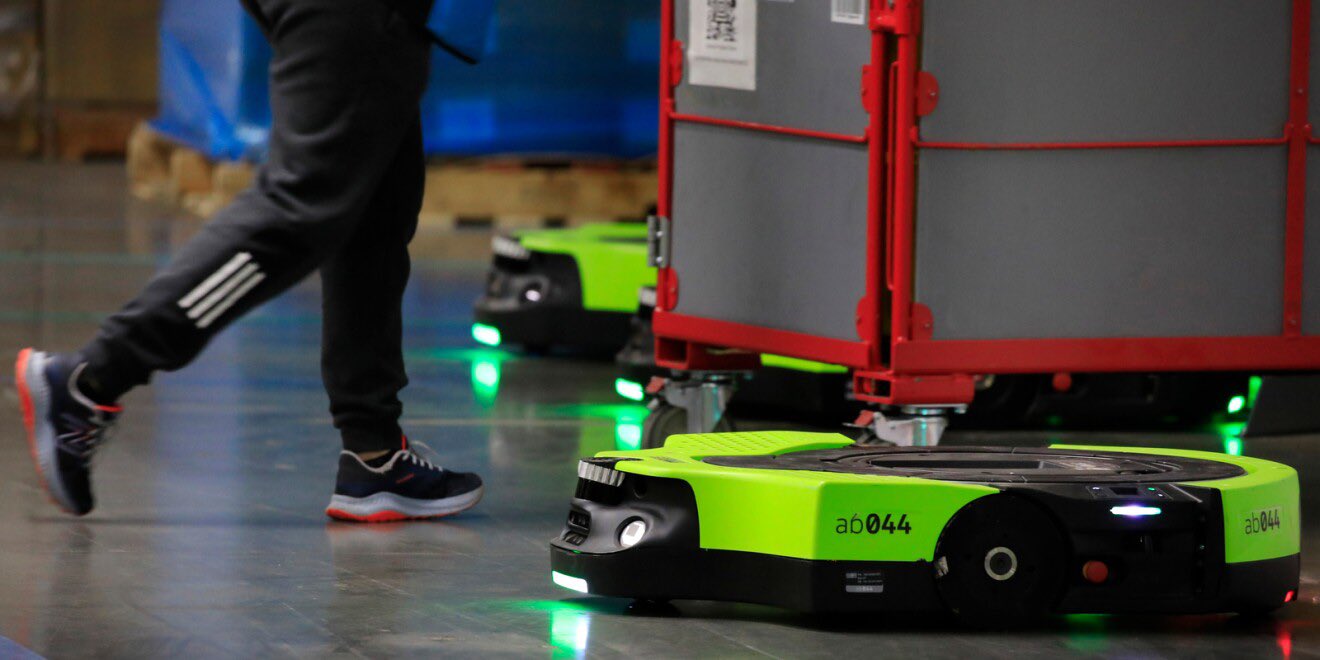
Amazon next-generation Proteus warehouse robot
The new Proteus and additional robotics expansions in Europe are designed to support employees by taking on physically strenuous tasks. | Amazon

To appreciate the significance of the upgrade, it helps to understand the capabilities of the original Proteus robot. The first-generation machine operates within dock areas inside fulfillment centers, transporting heavy carts weighing close to 400 kilograms. The next-generation version, however, breaks free of those constraints, demonstrating the ability to work anywhere that items need to be moved. This expanded versatility allows the robot to handle tasks ranging from receiving containers upon their arrival to transferring them between workstations across fulfillment centers and delivery sites, dramatically broadening the scope of its potential applications within Amazon’s complex logistics network.

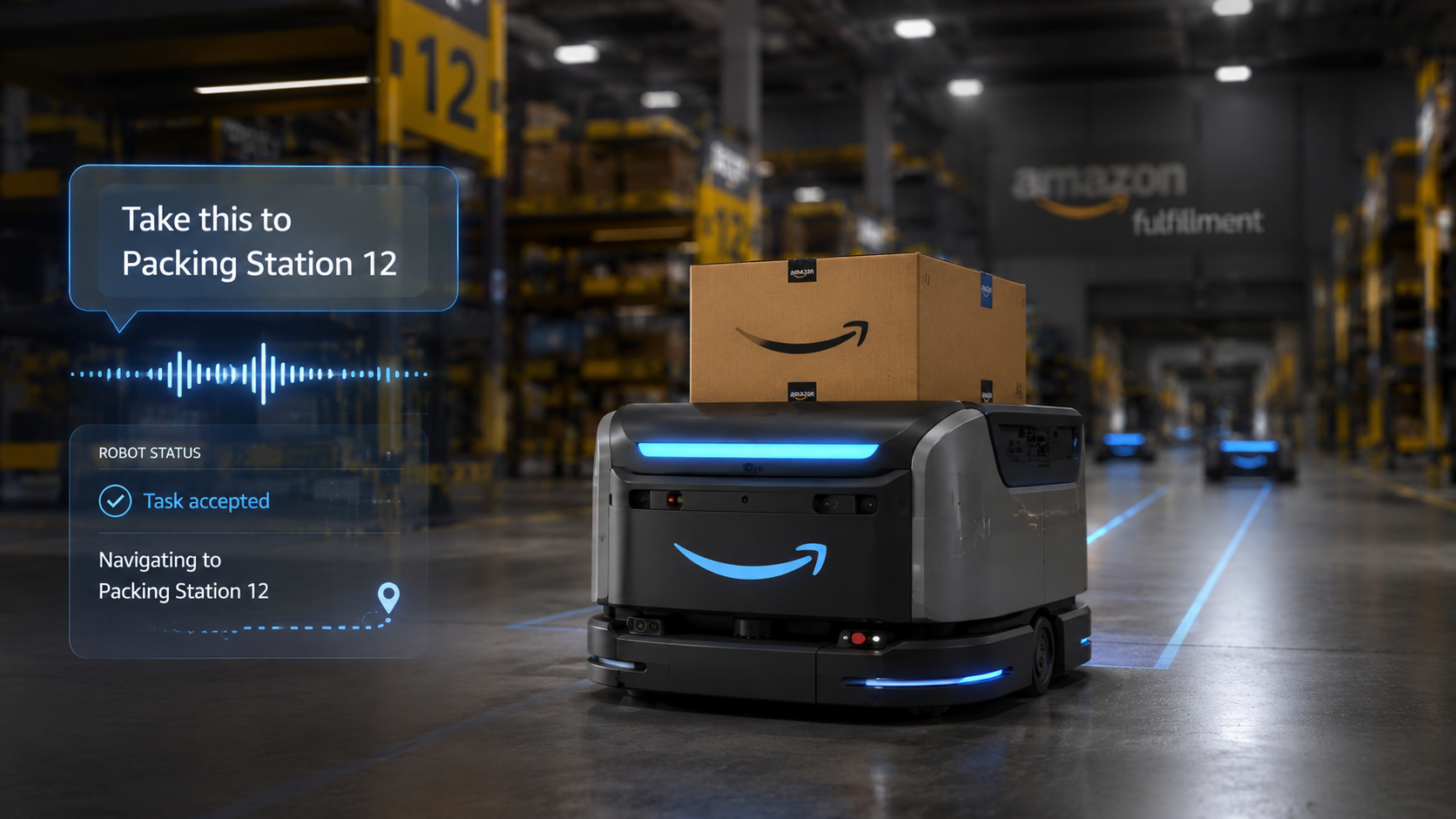
The most notable advancement, however, lies in how workers interact with the machine. Using artificial intelligence, the new Proteus understands natural language, allowing employees to assign tasks in the same way they would communicate with a human colleague rather than through technical commands or programming interfaces. This intuitive mode of interaction represents a meaningful step toward making sophisticated robotics accessible to workers without specialized technical training, potentially transforming the relationship between human employees and the machines that assist them in their daily work.

TODAY: Amazon just announced a multi-year plan to invest over €10 billion to expand and modernize its European fulfillment centers, including hiring 25,000 new employees. The investment will include the launch of a next-generation autonomous robot and the expansion of systems… https://t.co/wn3yw5tfVo

— Amazon (@amazon) June 4, 2026

The transformative nature of this capability was captured by Scott Dresser, vice president of Amazon Robotics, who described the robot’s autonomous decision-making abilities in striking terms. “You tell it what needs to be done. It figures out the priority, the route, the timing,” Dresser explained. “It becomes your assistant for material movement.” This characterization positions the robot not merely as a tool but as a collaborative partner capable of independent reasoning, reflecting the growing sophistication of AI-driven automation. The system is currently being piloted in Amazon’s labs, with deployment across European sites planned for the first half of 2027.

The Proteus upgrade sits within a broader robotics expansion unfolding across the continent, encompassing several complementary innovations. Amazon highlighted STARK, a collaborative robotic tote-handling system that picks full totes from conveyors and places them on carts, performing work that would otherwise require repetitive heavy lifting from human workers. Notably, STARK was born from an operations employee’s idea, underscoring the value Amazon places on innovation originating from within its own workforce. First piloted in Barcelona, Spain, STARK is planned to expand to 15 European sites by 2027, reflecting confidence in its practical utility.
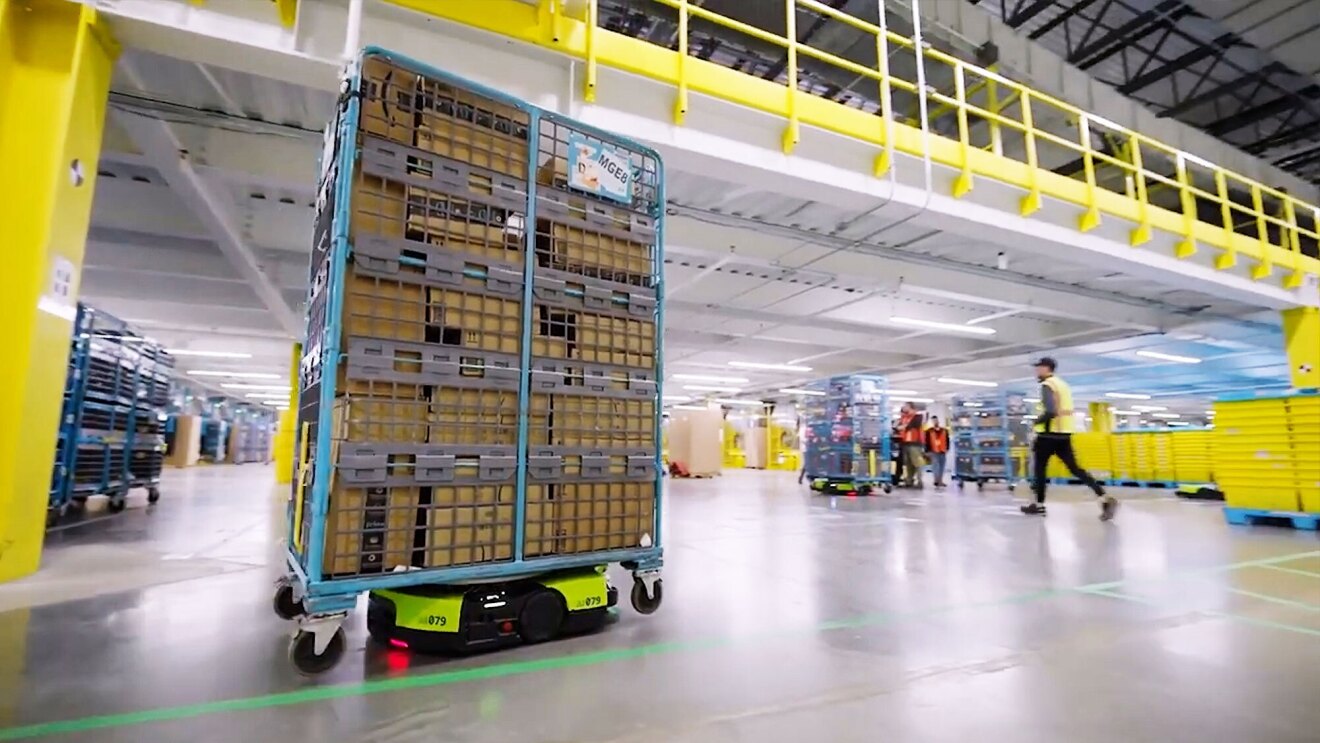
Amazon employee directing a Proteus robot with spoken commands
Amazon Proteus Stocking the right products in the right locations

Another key element of this expansion is Vulcan, Amazon’s first robot equipped with touch-sensitive force feedback sensors, which is also growing its footprint. Originally developed for a facility in Spokane, Washington, Vulcan has moved into Amazon’s Hamburg facility in Germany to take on more complex picking tasks. The incorporation of force feedback technology represents an important advance in robotic dexterity, enabling machines to handle items with greater care and precision, thereby expanding the range of tasks that automation can reliably perform within the demanding environment of a fulfillment center.

Underpinning these technological initiatives is a substantial commitment to jobs and investment that reinforces Amazon’s strategic focus on Europe. “Europe is at the center of how we’re building our operations for the future,” Dresser stated. “The investment we’re making here, the talent we’re building with here, the technology we’re deploying here—this is where the next chapter of operations innovation is being written.” The €10 billion commitment covers the expansion and modernization of fulfillment operations over the coming years, while the $1 billion Career Choice pledge aims to upskill an additional 500,000 employees globally, with more than €30 million dedicated to the program across Europe in 2026. Taken together, these announcements paint a picture of a company investing heavily in both advanced technology and human capital, positioning itself to navigate the evolving landscape of logistics and automation while maintaining a meaningful commitment to the development of its workforce. As Amazon advances these initiatives, the next-generation Proteus and its companion technologies offer a compelling glimpse into a future in which intelligent robots and human workers collaborate ever more seamlessly to meet the demands of modern commerce.

Tags: AI roboticsAmazonProteus robot
Aman Chamlagain

Aman Chamlagain

Aman Chamlagain is the founder and editor of Techord, the Australian technology news site he started in 2026. He writes across the site's coverage of artificial intelligence, robotics and consumer tech, with a consistent interest in what global technology decisions mean for people living and working in Australia. His reporting tends to follow the same thread: the distance between what a company announces and what actually ships, and who carries the cost of that gap. He covers the major AI labs and the models they release, robotics as it moves from demonstration into real work, and the hardware readers are weighing up buying. He also sets Techord's editorial standards, including its rules on primary sourcing, verbatim quotes and disclosed AI use. Aman handles tips, corrections and pitches personally. He can be reached at amannchamlagai07@gmail.com.

  • Trending
  • Comments
  • Latest
SpaceX IPO Draws $150 Billion in Demand, Doubling Its Target Ahead of Historic Debut

SpaceX IPO Draws $150 Billion in Demand, Doubling Its Target Ahead of Historic Debut

September 5, 2026
Apple Appoints New Leader to Advance Non-Invasive Blood Glucose Monitoring Project

Apple Appoints New Leader to Advance Non-Invasive Blood Glucose Monitoring Project

August 14, 2026
Bosch Partners with UK Startup Humanoid to Manufacture HMND 01 Robots at Scale

Bosch Partners with UK Startup Humanoid to Manufacture HMND 01 Robots at Scale

September 8, 2026
Nvidia CEO Jensen Huang Says Field of Study Won’t Matter in the AI Era

Nvidia CEO Jensen Huang Says Field of Study Won’t Matter in the AI Era

August 14, 2026
Nvidia CEO Jensen Huang Says Field of Study Won’t Matter in the AI Era

Nvidia CEO Jensen Huang Says Field of Study Won’t Matter in the AI Era

0
Apple Appoints New Leader to Advance Non-Invasive Blood Glucose Monitoring Project

Apple Appoints New Leader to Advance Non-Invasive Blood Glucose Monitoring Project

0
BYD Launches Dolphin G DM-i, Its First Vehicle Designed Exclusively for Europe

BYD Launches Dolphin G DM-i, Its First Vehicle Designed Exclusively for Europe

0
Hyundai Launches Atlas Robot World Cup Campaign Ahead of Massive 25,000-Unit Factory Rollout

Hyundai Launches Atlas Robot World Cup Campaign Ahead of Massive 25,000-Unit Factory Rollout

0
Editorial collage of Singapore's waterfront skyline with a schematic link between Singapore and Australia.

Australian AI Companies Target Singapore’s Enterprise Market

October 15, 2026
Editorial illustration of an Arkeus Warden sensor with a separate Drone Forge portfolio aircraft in the background.

Drone Forge and Arkeus Explore New Sensing Capabilities for Autonomous Aircraft

October 15, 2026
Editorial collage of Kingswood railway station and a Hume Highway bridge with restrained amber monitoring motifs.

NSW Trials Smart Sensors to Detect Danger on Railways and Highways

October 15, 2026
Editorial montage of CSIRO's yellow uncrewed survey vessel on coastal water and seagrass in murky water below.

Australian Researchers Trial Robots to Map Seagrass in Murky Water

October 15, 2026

Recent News

Editorial collage of Singapore's waterfront skyline with a schematic link between Singapore and Australia.

Australian AI Companies Target Singapore’s Enterprise Market

October 15, 2026
Editorial illustration of an Arkeus Warden sensor with a separate Drone Forge portfolio aircraft in the background.

Drone Forge and Arkeus Explore New Sensing Capabilities for Autonomous Aircraft

October 15, 2026
Editorial collage of Kingswood railway station and a Hume Highway bridge with restrained amber monitoring motifs.

NSW Trials Smart Sensors to Detect Danger on Railways and Highways

October 15, 2026
Editorial montage of CSIRO's yellow uncrewed survey vessel on coastal water and seagrass in murky water below.

Australian Researchers Trial Robots to Map Seagrass in Murky Water

October 15, 2026
Techord

Techord: Australian technology news.

Techord is an Australian technology publication covering AI, robotics, science, gadgets and electric vehicles, with news and context for Australian readers.

Browse Categories

  • AI

Recent News

Editorial collage of Singapore's waterfront skyline with a schematic link between Singapore and Australia.

Australian AI Companies Target Singapore’s Enterprise Market

October 15, 2026
Editorial illustration of an Arkeus Warden sensor with a separate Drone Forge portfolio aircraft in the background.

Drone Forge and Arkeus Explore New Sensing Capabilities for Autonomous Aircraft

October 15, 2026
  • About Techord
  • Contact
  • Privacy Policy
  • Terms
  • Submit a Tip

© 2026 Techord. All rights reserved.

Welcome Back!

Login to your account below

Forgotten Password?

Retrieve your password

Please enter your username or email address to reset your password.

Log In
No Result
View All Result
  • Home
  • AI
  • Robotics
  • Science
  • Future Tech
  • Big Tech
  • Latest News

© 2026 Techord. All rights reserved.


