

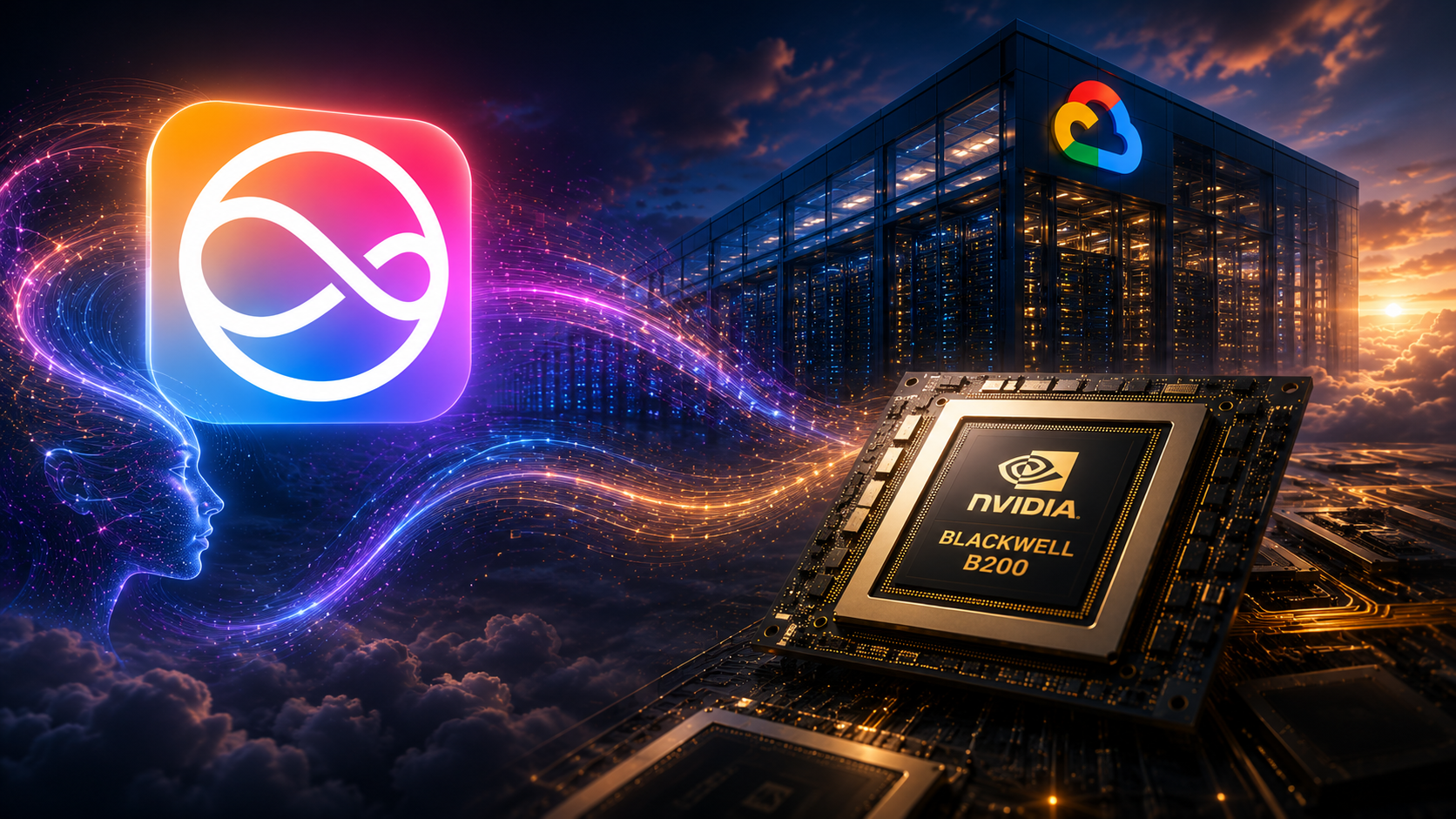
Apple is on track to launch a revamped version of Siri in September, relying in part on Nvidia Blackwell B200 processors housed in Google Cloud data centers, according to a report published Tuesday by The Information. This development represents a notable shift in Apple’s approach to powering its flagship voice assistant, reflecting the company’s willingness to draw upon external infrastructure and technology to deliver the advanced capabilities it envisions for the next generation of Siri. The arrangement underscores the increasingly collaborative and interconnected nature of the artificial intelligence industry, where even a company as famously self-reliant as Apple finds value in partnering with others to achieve its ambitions.
The practical implications of this arrangement are significant for how the new Siri will function. Some user queries directed at the revamped assistant will be routed through Google Cloud and processed on a licensed version of Google’s Gemini large language model running on Nvidia’s flagship data center GPUs. To support this configuration while upholding its longstanding commitments to user privacy, Apple has recently approved Nvidia’s confidential computing feature for use in that environment. This hardware-level encryption system protects both data and AI models while they are being processed on the chips, ensuring that sensitive information remains secure even when handled on infrastructure operated by third parties. This careful attention to privacy reflects Apple’s effort to reconcile its reliance on external technology with the privacy principles that have become central to its brand identity.
The report builds upon a deal that Apple and Google announced on January 12, 2026, when the two companies disclosed a multi-year partnership placing Gemini at the core of Apple’s next-generation Foundation Models. At the time of that announcement, Apple offered a clear rationale for its choice, stating that “after careful evaluation, we determined that Google’s technology provides the most capable foundation for Apple Foundation Models.” This endorsement of Google’s technology marked a noteworthy moment in the relationship between the two technology giants, who are simultaneously competitors and collaborators across various domains, and signaled Apple’s pragmatic willingness to adopt the best available tools regardless of their origin.
The financial dimensions of the partnership further illuminate its scale and significance. Bloomberg previously reported that Apple is paying Google roughly $1 billion annually for access to a custom 1.2 trillion-parameter Gemini model, a substantial investment that reflects the value Apple places on securing access to cutting-edge AI capabilities. Beyond simply using this large model for cloud-based processing, Apple is also leveraging it to train smaller models capable of running locally on devices through a process known as distillation. This approach allows Apple to bring sophisticated AI functionality directly to its hardware, balancing the power of cloud-based processing with the privacy and responsiveness advantages of on-device computation.
The timing of Apple’s decision to embrace Nvidia’s confidential computing technology adds further context to the unfolding story. According to The Information’s Aaron Tilley, Apple’s choice to enable this feature came “in recent weeks,” indicating that the arrangement has been finalized relatively recently as the September launch approaches. While the confidential computing feature slightly slows down cloud-based AI processing, it enables Apple to maintain its privacy commitments by ensuring that data remains encrypted even while being computed on third-party hardware. This trade-off between performance and privacy illustrates the considered decisions Apple must navigate as it integrates external infrastructure into its ecosystem while striving to preserve the trust of its users.
Notably, Apple is expected to continue using its “Private Cloud Compute” branding for the next wave of Apple Intelligence features, even though the underlying workloads will no longer run exclusively on Apple’s own servers. This continuity in branding suggests that Apple intends to maintain a consistent narrative around privacy and security for its users, even as the technical realities behind that branding evolve to incorporate third-party hardware and cloud services. The decision raises interesting questions about how the company will communicate these changes to its customers while preserving the assurances that the Private Cloud Compute name has come to represent.
Looking ahead to the coming months, Apple has a clear timeline for introducing these new capabilities to the public. The company plans to preview the new Siri capabilities at WWDC 2026, which begins June 8, with a public release expected alongside iOS 27 and the iPhone 18 in September. This phased approach, beginning with a developer-focused preview before a broader consumer launch, aligns with Apple’s customary product introduction strategy and will allow developers and observers alike to gain early insight into the revamped assistant’s capabilities. Adding further confirmation to these plans, Google Cloud CEO Thomas Kurian stated in April that Gemini-powered Apple Intelligence features, “including a more personalized Siri,” are coming later this year. As the September launch draws nearer, the collaboration between Apple, Google, and Nvidia stands as a compelling illustration of how the boundaries between competing technology companies can blur in the pursuit of advancing artificial intelligence, offering users the prospect of a markedly more capable and intelligent Siri while raising thoughtful questions about privacy, infrastructure, and the evolving architecture of modern AI systems.








