

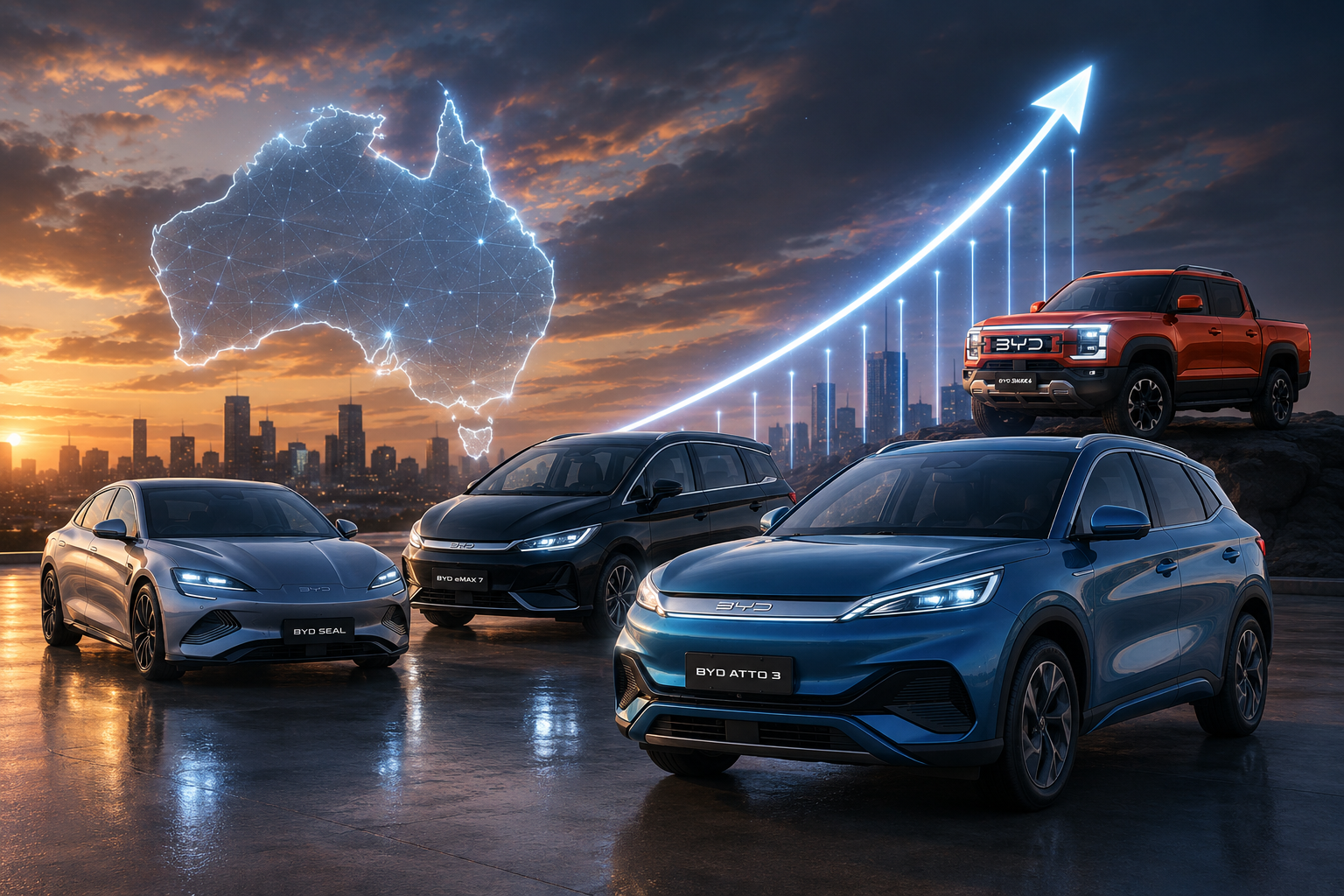
BYD has cemented its position as Australia’s second-best-selling vehicle brand for the second consecutive month, delivering 8,211 vehicles in May 2026, a remarkable 155 percent increase from the same month a year earlier, according to official VFACTS sales data published by the Federal Chamber of Automotive Industries. This achievement represents a significant milestone in the Chinese automaker’s expansion into the Australian market and reflects broader transformations reshaping the nation’s automotive landscape. The scale and speed of BYD’s growth underscore the increasingly competitive dynamics at play as established brands contend with ambitious newcomers from China.
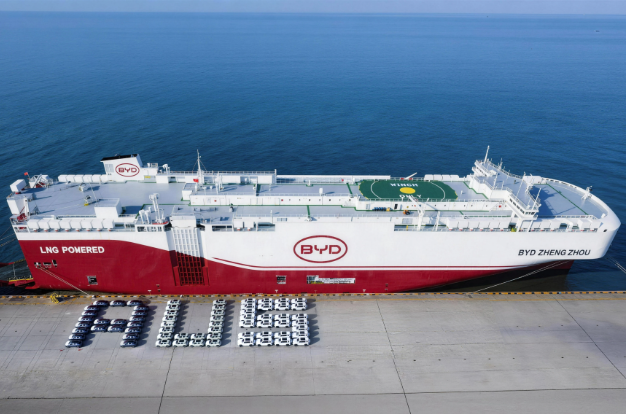
The automaker’s rise was punctuated by a notable logistical achievement, the maiden Australian voyage of the BYD Zhengzhou, a purpose-built car carrier that docked at Port Melbourne on May 31 carrying approximately 4,810 electric and plug-in hybrid vehicles. The cargo included a range of BYD and Denza models, with the Sealion 7 and Atto 2 accounting for more than 2,000 of the vehicles on board, alongside the Denza B5 off-roader and the D9 people mover. This deployment of a dedicated vessel illustrates the company’s determination to meet surging demand and to streamline the delivery of its vehicles to Australian customers, signaling a serious long-term commitment to the market.
May’s results paint a striking picture of BYD’s competitive standing within the Australian new-car market. The company commanded a 7.7 percent share of the market, trailing only Toyota, which held 15.3 percent. Ford followed in third place with 7,195 sales, while Hyundai and Kia rounded out the top five. Looking at the broader trajectory, BYD has sold 33,454 vehicles year-to-date in 2026, representing an impressive 120 percent growth over the same period in 2025. These figures demonstrate not merely a momentary surge but a sustained pattern of expansion that has propelled the brand into the upper echelons of the Australian market.
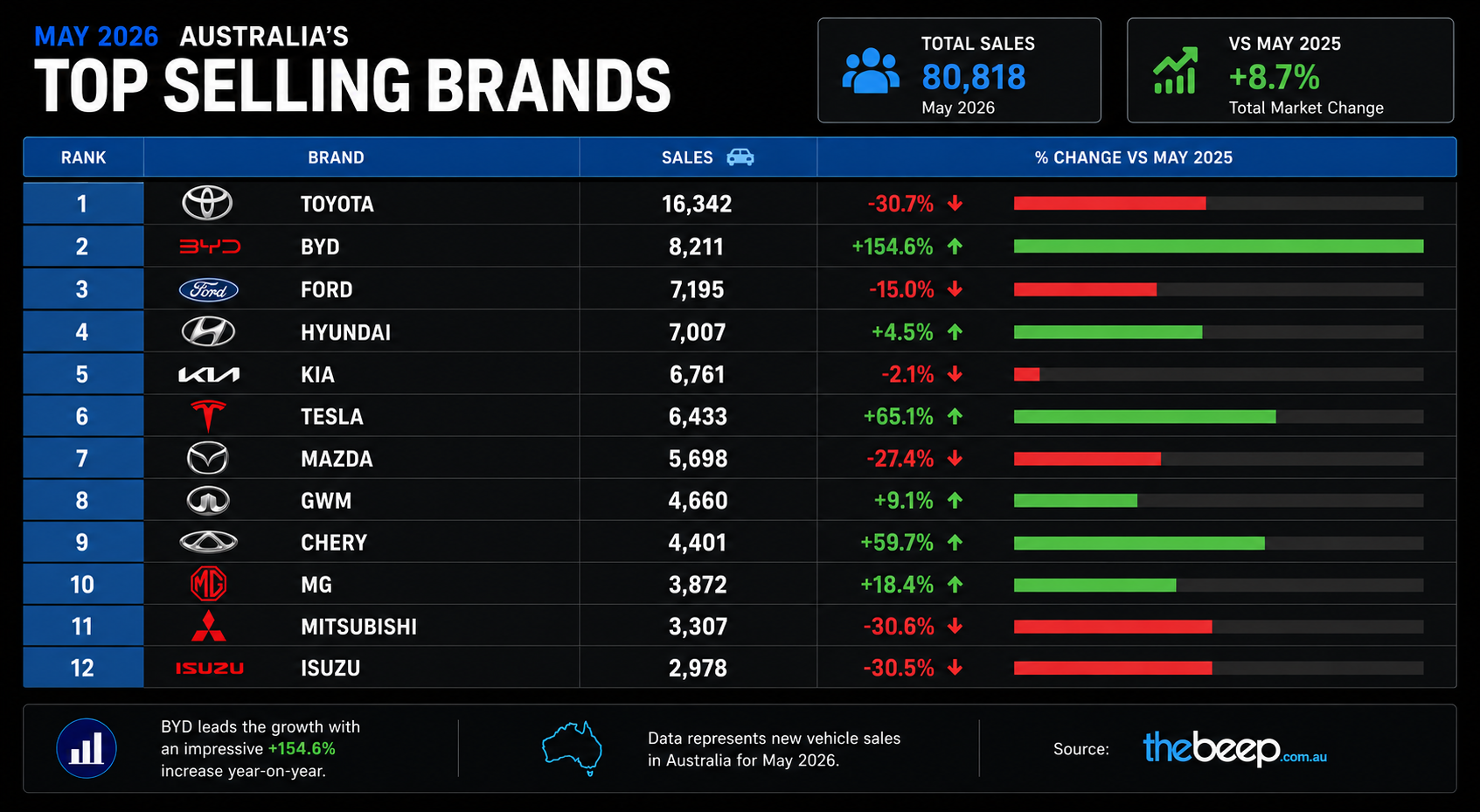
The momentum extends beyond BYD to encompass a broader wave of Chinese automotive success in Australia. Fellow Chinese brand GWM recorded 4,660 sales in May, an increase of 9.1 percent, bringing its year-to-date tally to 24,255 units. The shift toward electrified transportation was equally evident across the market as a whole, with battery electric vehicles reaching a record 20 percent market share for the month. When including hybrids and plug-in hybrids, electrified vehicles comprised 46.4 percent of all deliveries, indicating that nearly half of new vehicles sold now incorporate some form of electrified powertrain, a profound shift in consumer preferences and market composition.
The arrival of the BYD Zhengzhou carried particular significance as the first time BYD has deployed its own vessel to Australian shores. According to BYD Australia’s official account, the shipment was arranged to expedite the delivery of vehicles to customers, reflecting the company’s focus on responsiveness and customer satisfaction. However, some uncertainty remains regarding the company’s shipping strategy, as BYD’s Asia-Pacific leadership was unable to confirm when the vessel would return, according to reporting by Drive. This ambiguity leaves open questions about whether the dedicated vessel represents a one-time measure or the beginning of a sustained logistical commitment.
These developments unfold against a backdrop of broader structural change in Australia’s automotive import patterns. China has overtaken Japan as the primary source country for vehicles sold in Australia, a historic shift underscored by the fact that in February 2026, Chinese-assembled vehicles outsold Japanese-assembled ones for the first time in 28 years. This reordering of the market’s foundations reflects the rapid maturation of China’s automotive industry and its growing capacity to compete on quality, technology, and value. Against this favorable environment, BYD has publicly stated its ambition to finish 2026 as a top-three brand for the full calendar year, a goal that May’s results suggest is well within reach.
The remarkable growth story extends well beyond BYD alone, encompassing several Chinese brands that have collectively reshaped the competitive landscape. Chery posted 92 percent year-to-date sales growth through April 2026, while BYD recorded 110 percent growth over the same period. The influx of Chinese vehicles has displaced a number of established names, and in a striking demonstration of this shift, August 2025 saw four Chinese brands simultaneously crack Australia’s top 10 for the first time, pushing out Isuzu Ute, Subaru, Volkswagen, and Nissan. This displacement of long-established marques highlights the disruptive impact that Chinese manufacturers are having on a market that has traditionally been dominated by Japanese, Korean, and Western brands.
As BYD looks toward the remainder of 2026, its stated target of reaching the top three by year’s end appears increasingly attainable. “We aim to be in the top three by the end of this year,” BYD Australia has said, a target that May’s results suggest is well within reach. The convergence of BYD’s aggressive expansion, the broader surge in Chinese automotive imports, and the accelerating adoption of electrified vehicles together signal a transformative period for Australia’s automotive market. As consumers increasingly embrace electric and plug-in hybrid options, and as Chinese manufacturers continue to refine their offerings and expand their presence, the coming months promise to further reshape the competitive hierarchy. BYD’s extraordinary ascent stands as a compelling emblem of these intertwined trends, offering a glimpse into a future in which the Australian automotive market looks markedly different from the one consumers have long known.
Related reporting: EV Sales Australia: Electric Outsells Petrol for First Time.








