

No Result
View All Result
Techord
Subscribe
  • AI
  • Tech
  • Robotics
  • Science
  • Gadgets
  • AI
  • Tech
  • Robotics
  • Science
  • Gadgets
No Result
View All Result
No Result
View All Result
Techord
Subscribe
Home Tech

CSIRO Is Using Ocean Drones to Understand How the Southern Ocean Moves Carbon

Aman Chamlagain by Aman Chamlagain
October 5, 2026
in Tech
0
CSIRO Is Using Ocean Drones to Understand How the Southern Ocean Moves Carbon
0
SHARES
1
VIEWS
Share on FacebookShare on Twitter

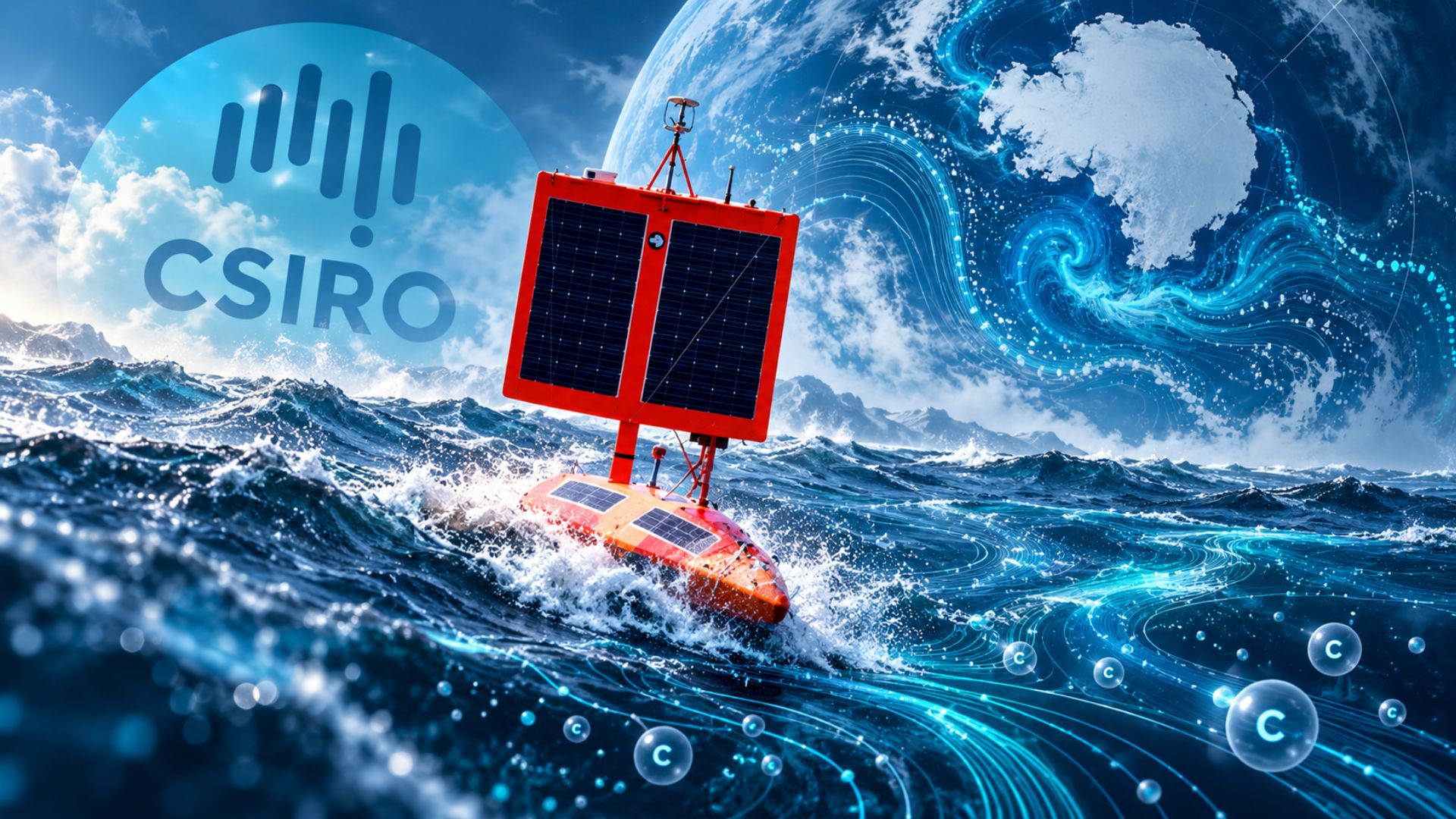
CSIRO announced on 24 September 2026 that its first Saildrone had departed Hobart for research in the Southern Ocean. The agency says the project plans to use four autonomous vehicles over five years, collecting ocean and atmospheric measurements. The aim is to improve understanding of how much carbon dioxide moves between the sea and the air.

The vessels use wind for propulsion and solar energy for onboard systems. CSIRO says they can remain at sea for months, collecting measurements including temperature, salinity, oxygen and carbon dioxide alongside atmospheric conditions. That combination matters because interpreting an ocean carbon measurement requires knowledge of the surrounding physical environment as well as the gas itself.

🌊 CSIRO and partners have launched wind- and solar-powered ocean drones from Hobart to track Southern Ocean CO2 uptake for five years, with quarterly deployments around Antarctica.https://t.co/rBn2TOvpKLhttps://t.co/Rvj9qnCSBu @iEnviroAust #iEnvi #CSIRO #ClimateScience pic.twitter.com/OhN3SXra8C

— Michael Nicholls (@MikeyJNicholls) September 29, 2026

Hobart provides the departure point for an international research effort. CSIRO lists collaborators including the Australian Antarctic Program Partnership, NOAA, the University of Washington, Columbia University and Saildrone. The planned repeated deployments are intended to build a record through changing conditions. They should not be read as four completed journeys or five years of observations already in hand.

The project’s name describes the central scientific problem being addressed. COCO2, or Constraining Ocean Carbon with Optimized Observing, aims to reduce uncertainty using missions informed by models and adaptive planning. In practical terms, researchers want to learn which measurements would be most useful, then adjust subsequent observing routes rather than simply repeat an unchanged itinerary.

NOAA’s public mission record identifies the 2026 Saildrone 1092 dataset and describes that approach. Its programme summary calls for four vehicles departing Hobart in each project year, with new observations used to improve the following campaign. The record is evidence that measurements are being organised and made available; it is not yet a conclusion about the Southern Ocean’s overall carbon balance.

Earlier voyages show both the possibility and difficulty of this work. NOAA reported that Saildrone 1020 completed a 196-day autonomous circumnavigation of Antarctica in August 2019. The vessel continued gathering carbon dioxide data despite an iceberg encounter that damaged some sensors. That experience provides background for the new campaign, rather than a guarantee that every planned deployment will finish intact.

The carbon question also requires observations across seasons and locations. NOAA’s account describes how winds and circulation can alter uptake, with some conditions allowing the Southern Ocean to release carbon dioxide. Sparse measurements during harsh weather make those exchanges harder to quantify. A vessel’s capacity to remain at sea can help fill gaps, but the resulting measurements still need analysis and comparison.

The Australian contribution is therefore a sustained observing capability based in Hobart. The most meaningful results will come from how the collected data changes estimates and guides the next deployment. For now, the programme has begun putting instruments into remote waters; its scientific conclusions remain work for the years ahead.

Tags: Climate ResearchCSIROHobartOcean ScienceSaildrone
Aman Chamlagain

Aman Chamlagain

Aman Chamlagain is the founder and editor of Techord, the Australian technology news site he started in 2026. He writes across the site's coverage of artificial intelligence, robotics and consumer tech, with a consistent interest in what global technology decisions mean for people living and working in Australia. His reporting tends to follow the same thread: the distance between what a company announces and what actually ships, and who carries the cost of that gap. He covers the major AI labs and the models they release, robotics as it moves from demonstration into real work, and the hardware readers are weighing up buying. He also sets Techord's editorial standards, including its rules on primary sourcing, verbatim quotes and disclosed AI use. Aman handles tips, corrections and pitches personally. He can be reached at amannchamlagai07@gmail.com.

  • Trending
  • Comments
  • Latest
SpaceX IPO Draws $150 Billion in Demand, Doubling Its Target Ahead of Historic Debut

SpaceX IPO Draws $150 Billion in Demand, Doubling Its Target Ahead of Historic Debut

September 5, 2026
Apple Appoints New Leader to Advance Non-Invasive Blood Glucose Monitoring Project

Apple Appoints New Leader to Advance Non-Invasive Blood Glucose Monitoring Project

August 14, 2026
Bosch Partners with UK Startup Humanoid to Manufacture HMND 01 Robots at Scale

Bosch Partners with UK Startup Humanoid to Manufacture HMND 01 Robots at Scale

September 8, 2026
Nvidia CEO Jensen Huang Says Field of Study Won’t Matter in the AI Era

Nvidia CEO Jensen Huang Says Field of Study Won’t Matter in the AI Era

August 14, 2026
Nvidia CEO Jensen Huang Says Field of Study Won’t Matter in the AI Era

Nvidia CEO Jensen Huang Says Field of Study Won’t Matter in the AI Era

0
Apple Appoints New Leader to Advance Non-Invasive Blood Glucose Monitoring Project

Apple Appoints New Leader to Advance Non-Invasive Blood Glucose Monitoring Project

0
BYD Launches Dolphin G DM-i, Its First Vehicle Designed Exclusively for Europe

BYD Launches Dolphin G DM-i, Its First Vehicle Designed Exclusively for Europe

0
Hyundai Launches Atlas Robot World Cup Campaign Ahead of Massive 25,000-Unit Factory Rollout

Hyundai Launches Atlas Robot World Cup Campaign Ahead of Massive 25,000-Unit Factory Rollout

0
Editorial collage of Singapore's waterfront skyline with a schematic link between Singapore and Australia.

Australian AI Companies Target Singapore’s Enterprise Market

October 15, 2026
Editorial illustration of an Arkeus Warden sensor with a separate Drone Forge portfolio aircraft in the background.

Drone Forge and Arkeus Explore New Sensing Capabilities for Autonomous Aircraft

October 15, 2026
Editorial collage of Kingswood railway station and a Hume Highway bridge with restrained amber monitoring motifs.

NSW Trials Smart Sensors to Detect Danger on Railways and Highways

October 15, 2026
Editorial montage of CSIRO's yellow uncrewed survey vessel on coastal water and seagrass in murky water below.

Australian Researchers Trial Robots to Map Seagrass in Murky Water

October 15, 2026

Recent News

Editorial collage of Singapore's waterfront skyline with a schematic link between Singapore and Australia.

Australian AI Companies Target Singapore’s Enterprise Market

October 15, 2026
Editorial illustration of an Arkeus Warden sensor with a separate Drone Forge portfolio aircraft in the background.

Drone Forge and Arkeus Explore New Sensing Capabilities for Autonomous Aircraft

October 15, 2026
Editorial collage of Kingswood railway station and a Hume Highway bridge with restrained amber monitoring motifs.

NSW Trials Smart Sensors to Detect Danger on Railways and Highways

October 15, 2026
Editorial montage of CSIRO's yellow uncrewed survey vessel on coastal water and seagrass in murky water below.

Australian Researchers Trial Robots to Map Seagrass in Murky Water

October 15, 2026
Techord

Techord: Australian technology news.

Techord is an Australian technology publication covering AI, robotics, science, gadgets and electric vehicles, with news and context for Australian readers.

Browse Categories

  • AI

Recent News

Editorial collage of Singapore's waterfront skyline with a schematic link between Singapore and Australia.

Australian AI Companies Target Singapore’s Enterprise Market

October 15, 2026
Editorial illustration of an Arkeus Warden sensor with a separate Drone Forge portfolio aircraft in the background.

Drone Forge and Arkeus Explore New Sensing Capabilities for Autonomous Aircraft

October 15, 2026
  • About Techord
  • Contact
  • Privacy Policy
  • Terms
  • Submit a Tip

© 2026 Techord. All rights reserved.

Welcome Back!

Login to your account below

Forgotten Password?

Retrieve your password

Please enter your username or email address to reset your password.

Log In
No Result
View All Result
  • Home
  • AI
  • Robotics
  • Science
  • Future Tech
  • Big Tech
  • Latest News

© 2026 Techord. All rights reserved.


