


(NASDAQ:META) Meta Platforms on Wednesday unveiled its Business Agent to the world, announcing global availability of the AI-powered tool at its annual Conversations conference in London. The product, designed to automate customer interactions across WhatsApp, Messenger, and Instagram, marks a major push by the company into the enterprise AI market. This development reflects Meta’s growing ambition to extend its influence beyond social networking and into the realm of business services, positioning its widely used messaging platforms as central hubs for commercial interaction. By embedding sophisticated AI capabilities directly into the channels that billions of people already use to communicate, Meta is seeking to capture a significant share of the rapidly expanding market for AI-driven customer engagement tools.
The foundation for this global launch had already been substantially established through earlier versions of the technology. According to Meta, more than one million businesses have already been using earlier iterations of the AI chatbots on WhatsApp and Messenger, and the updated version has now been extended to Instagram and made available worldwide to companies of all sizes. This existing base of business users provides Meta with a considerable head start, demonstrating proven demand for such tools and offering a foundation upon which to build broader adoption. The expansion to Instagram and the opening of the service to businesses everywhere signal Meta’s intent to scale the offering aggressively and to make it accessible to enterprises ranging from small local operations to large multinational organizations.

The capabilities of the Business Agent are notably comprehensive, encompassing a wide range of functions that span the customer journey. The agent can answer customer questions, recommend products from a catalog, book appointments, qualify leads, close sales, and escalate complex issues to human staff when necessary. This breadth of functionality positions the tool as a versatile assistant capable of handling many of the routine interactions that businesses must manage, while preserving the option for human intervention when circumstances demand a more nuanced touch. By automating these tasks, the Business Agent promises to relieve businesses of considerable operational burden, potentially improving efficiency and responsiveness while freeing human employees to focus on higher-value activities that require judgment and personal attention.
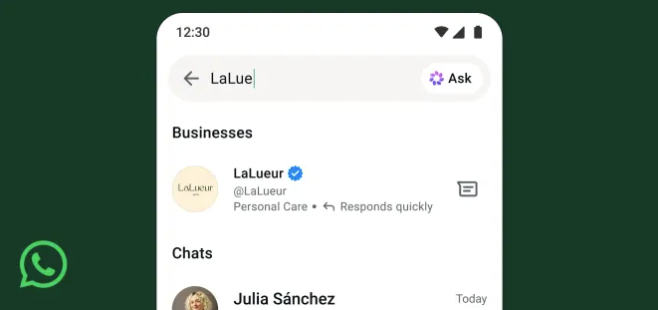
Meta has emphasized the ease and accessibility of the tool, noting that the agent can be set up in minutes and communicates in customers’ local languages while matching a company’s preferred tone and style. This combination of rapid deployment and adaptable communication addresses two common barriers to the adoption of business technology, namely the complexity of implementation and the difficulty of maintaining a consistent brand voice across automated interactions. In addition to facilitating customer conversations, the agent provides business owners with daily summaries of customer interactions and insights into engagement patterns, offering valuable visibility into how customers are interacting with their business. Looking ahead, Meta has indicated that future updates will introduce capabilities for market research, calendar management, and competitive intelligence, suggesting an ambition to evolve the tool into an increasingly comprehensive business assistant.
The commercial strategy underlying the Business Agent reflects a familiar approach to building market share before introducing monetization. The service will initially be free, with Meta planning to introduce paid subscription tiers in the coming months. CEO Mark Zuckerberg had hinted at this monetization strategy during the company’s first-quarter earnings call in April, when he noted that business AI tools were facilitating about 10 million conversations per week, a dramatic increase from one million at the start of the year. This rapid growth in usage underscores the accelerating adoption of the technology and helps explain Meta’s confidence in eventually charging for premium features. The decision to offer the service for free initially appears calculated to drive widespread adoption and establish the tool as an integral part of how businesses operate on Meta’s platforms before transitioning to a revenue-generating model.
Beyond the consumer-facing product, Meta introduced a more sophisticated offering aimed at larger and more technically capable organizations. The company unveiled the Business Agent Platform, an infrastructure layer that allows companies to build and deploy custom AI agents at scale. This platform supports integrations with external systems including Shopify, Zendesk, and Shopee, and offers enterprise-grade controls and compliance tools designed for larger organizations. The introduction of this platform reflects Meta’s recognition that different businesses have different needs, and that serving the enterprise market effectively requires providing the flexibility and robustness necessary to support complex, large-scale deployments. By enabling integration with widely used commercial systems, Meta has sought to position its platform as a practical and powerful foundation for businesses seeking to develop tailored AI solutions.
The launch unfolds against a backdrop of regulatory scrutiny that adds an important dimension to Meta’s strategy. The company currently faces regulatory attention in Europe concerning competition on WhatsApp. In May, Reuters reported that Meta offered rival AI chatbots, including OpenAI’s, limited free access to WhatsApp in Europe as part of negotiations with EU antitrust authorities. Meta’s decision to build its own business AI tools while restricting third-party general-purpose chatbots on the platform underscores a deliberate strategy to keep commercial AI interactions within its own ecosystem. This approach, while commercially logical, raises questions about competition and market access that regulators may continue to examine, highlighting the tension between Meta’s business interests and broader concerns about fair competition in the rapidly evolving AI landscape.
The global rollout of the Business Agent had been preceded by a period of more limited testing, providing Meta with the opportunity to refine the product before its worldwide debut. The Wall Street Journal reported that Meta had been testing the Business Agent in some countries in a limited capacity before Wednesday’s global launch, indicating a measured approach to ensuring the tool’s readiness for broad deployment. This phased introduction allowed the company to gather feedback and make adjustments, reflecting prudent product development practices appropriate to a launch of such scale and significance.
Taken together, the global launch of Meta’s Business Agent represents a significant step in the company’s expansion into the enterprise AI market and its broader effort to integrate artificial intelligence deeply into commercial activity on its platforms. By offering businesses powerful tools to automate and enhance customer interactions, Meta is seeking to strengthen its position at the center of the digital economy while creating new avenues for future revenue. At the same time, the company’s strategy of keeping commercial AI interactions within its own ecosystem, even as it navigates regulatory scrutiny, reveals the competitive and legal complexities that accompany such ambitions. As the Business Agent reaches businesses around the world and Meta continues to develop its capabilities, the tool stands poised to play an increasingly influential role in shaping how companies engage with their customers in an era defined by the growing prevalence of conversational artificial intelligence.








