

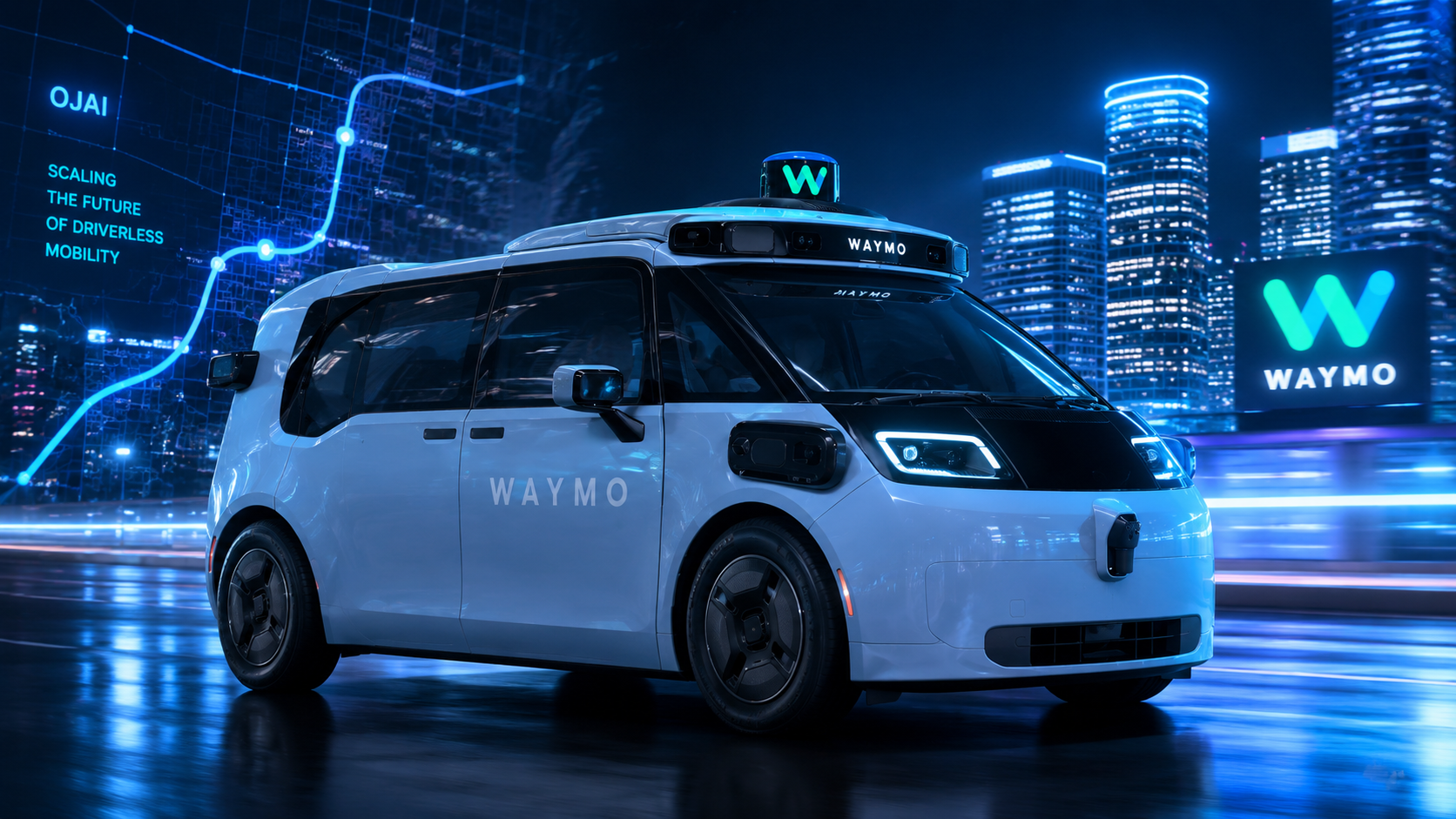
Waymo, the autonomous driving company owned by Alphabet, has begun offering rides in a new robotaxi called the Ojai, a vehicle designed to lower the cost of expanding its fleet as the company presses toward operating autonomous ride-hailing as a profitable business at scale. The all-electric, minivan-like vehicle is built around the company’s sixth-generation Driver, the suite of sensors and software that enables autonomous operation, and it has begun carrying select riders in Los Angeles, Phoenix, and San Francisco. Waymo has indicated that access will broaden to additional riders and cities over time, with San Diego, Las Vegas, and Denver among the markets slated to follow, signaling a deliberate and methodical expansion of its commercial service.
The introduction of the Ojai is closely tied to the economics of scaling an autonomous fleet, which have long been among the central challenges facing the robotaxi industry. Building vehicles equipped with the full complement of sensors and computing required for autonomous driving has historically been expensive, and bringing down that per-vehicle cost is essential to deploying the large fleets needed to serve major metropolitan areas profitably. By developing a vehicle explicitly aimed at making fleet expansion more affordable, Waymo is addressing one of the key barriers that has constrained the growth of autonomous ride-hailing, and the company has said it is scaling toward a capacity of tens of thousands of units annually, beginning with the Ojai and followed by a model based on the Hyundai Ioniq 5.
Notably, some versions of the Ojai have been described as including a steering wheel, a detail that carries symbolic as well as practical weight. For a company whose vehicles are designed to operate without human intervention, the inclusion of a steering wheel may serve to reassure passengers who remain uneasy about traveling in a fully driverless car, offering a measure of psychological comfort even in a vehicle intended to drive itself. This attention to rider comfort reflects an understanding that the broad adoption of autonomous vehicles depends not only on the technology working reliably but on passengers feeling safe enough to choose it.
Alongside the new vehicle, Waymo has substantially expanded its geographic footprint, growing its service area to more than 1,400 square miles across eleven US cities, an increase of roughly a quarter over its previous coverage. The expansion has extended into markets including Miami, with Austin, Atlanta, Houston, and the broader San Francisco Bay Area identified for further growth. This widening footprint reflects the company’s transition from operating in a handful of carefully chosen areas toward establishing a presence across a meaningful portion of the country, a shift that brings both greater commercial opportunity and the operational complexity of managing service across diverse urban environments.
The scale of Waymo’s ambitions is underscored by its financial position and operating metrics. Earlier in the year the company raised a substantial 16-billion-dollar funding round at a valuation of roughly 126 billion dollars, providing significant capital to fuel its expansion. Waymo has reported serving more than 20 million trips with a fleet of around 3,000 robotaxis, and it has set a target of reaching one million trips per week by the end of 2026. These figures suggest a service that has moved well beyond the experimental phase into genuine commercial operation, even as the path to sustained profitability across a large and growing footprint remains demanding.
Perhaps most striking is Waymo’s stated intention to expand internationally, with London and Tokyo identified as its first markets abroad. International expansion introduces a new layer of complexity, since autonomous vehicles must contend with different traffic patterns, regulations, road conventions, and weather conditions in each new market. The decision to pursue cities as distinct as London and Tokyo reflects considerable confidence in the adaptability of Waymo’s technology, while also representing a significant test of whether a system developed and refined largely in American cities can perform reliably in markedly different environments.
Waymo’s progress stands out in an industry that has repeatedly underestimated the difficulty of autonomous driving and seen numerous competitors falter. The company’s measured, methodical approach, combined with the substantial resources of its parent Alphabet, has allowed it to build what is now among the most established autonomous ride-hailing operations in the world. Significant challenges remain, from the economics of scaling to the complexities of international markets and the ever-present imperative of safety, but the rollout of the Ojai and the broadening of its service area mark meaningful steps in Waymo’s effort to turn a long-promised technology into a durable and profitable business.
Related reporting: Tesla Cybercab Robotaxi Launches Paid Rides in Austin.








