

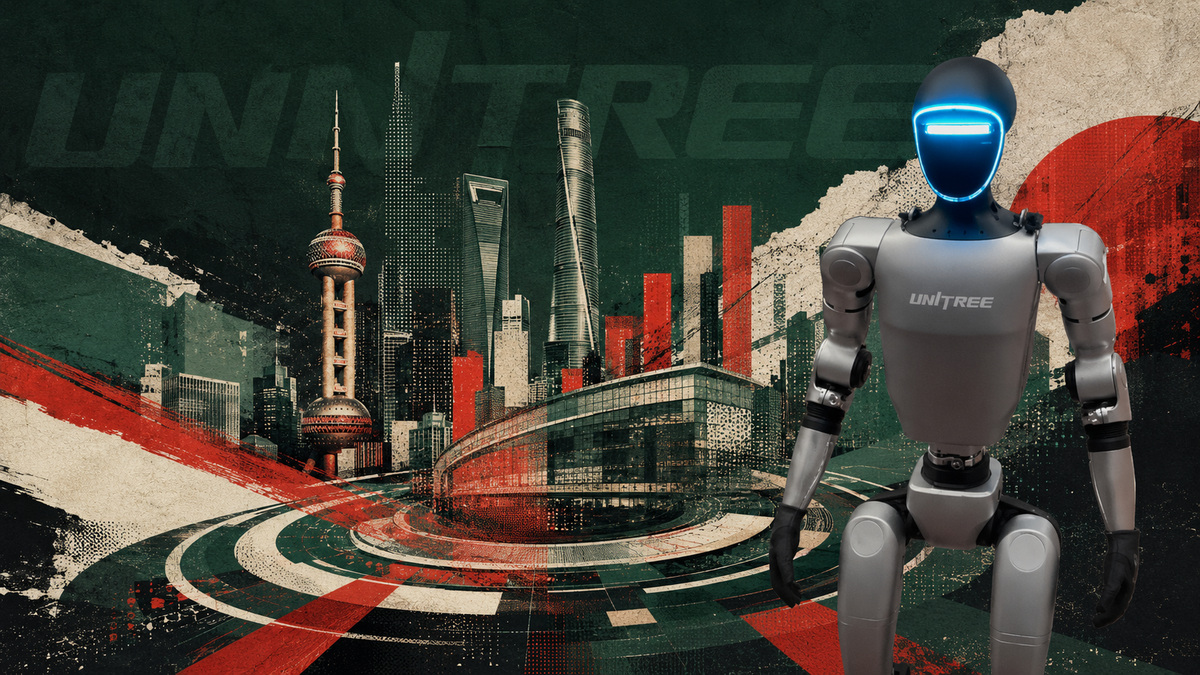
Chinese robot maker Unitree priced its Shanghai initial public offering at 150.80 yuan a share on Thursday 6 August, valuing the company at about US$9 billion in mainland China’s first listing by a humanoid robot manufacturer, Reuters reported.
The offer will raise about 6.1 billion yuan, or roughly US$904 million, through the sale of 40.45 million new shares on the Shanghai Stock Exchange’s STAR Market, well above the 4.2 billion yuan the Hangzhou company originally targeted. The new shares represent about 10 per cent of the enlarged share capital, giving Unitree a valuation of 61 billion yuan, and subscriptions open on Monday 10 August. “The embodied AI industry is still at an early stage of development, similar to the early days of home appliances and personal computers,” founder and chief executive Wang Xingxing told an online investor meeting on Friday.
Unitree IPO figures show fast growth, thinner margins
Unitree, registered as Hangzhou Yushu Technology, reported revenue of 1.7 billion yuan in 2025, roughly four times the previous year, according to its prospectus. Humanoid machines brought in 867.8 million yuan of that and became the company’s largest business line. The company shipped 5,511 humanoid robots in 2025, more than ten times its 2024 total, at an average selling price of 166,400 yuan, and it has sold more than 33,000 of its robot dogs.
Net profit for 2025 came in at 278.2 million yuan, up nearly 200 per cent on the year before, though the growth is getting more expensive. First quarter revenue for 2026 rose 68.5 per cent to 422.8 million yuan, while adjusted profit fell 52.6 per cent to 40.3 million yuan on higher research and marketing spending. AI developer DeepSeek joined the deal as a strategic investor, taking about 933,400 shares for roughly 141 million yuan, about 2.3 per cent of the shares placed with strategic investors.
Unitree filed for the listing in March, and proceeds from the float will fund robot software and hardware development along with a new manufacturing facility, the company said in its filings. Wang, 36, holds a stake worth about US$2.4 billion at the offer price, making him China’s first humanoid robot billionaire, according to Forbes, which counts more than 200 Chinese companies now working on humanoid machines.
The pricing comes eight days after the United States Federal Communications Commission announced a ban on new foreign-made humanoid and quadruped robots on 29 July, a measure aimed at Chinese suppliers. FCC chairman Brendan Carr said the move would “secure America’s critical supply chains.” The United States accounted for 13.3 per cent of Unitree’s 2025 revenue, and the company’s prospectus warns of risks from “U.S. tariffs, limits on government purchases, export controls or the loss of existing approvals,” while noting its already approved models can still be sold there.
The Pentagon has separately placed Unitree on a list of firms it says have ties to the Chinese military, a designation Beijing rejected, even as Nvidia showed a humanoid robot design built on a Unitree chassis in June. “Protectionism does not make the U.S. more competitive, and it will only hurt the interests of U.S. companies and consumers,” said Chinese foreign ministry spokesperson Mao Ning.
“The stock is likely to see a strong market debut,” said Shen Meng, director at Beijing investment bank Chanson & Co, citing retail investor enthusiasm and the company’s position in its market. Wang told Friday’s investor meeting the company “will continue to advance key software and hardware technologies and explore a broader range of product forms and models.” Subscriptions for the offer open on Monday 10 August, with trading on the STAR Market to follow.








