

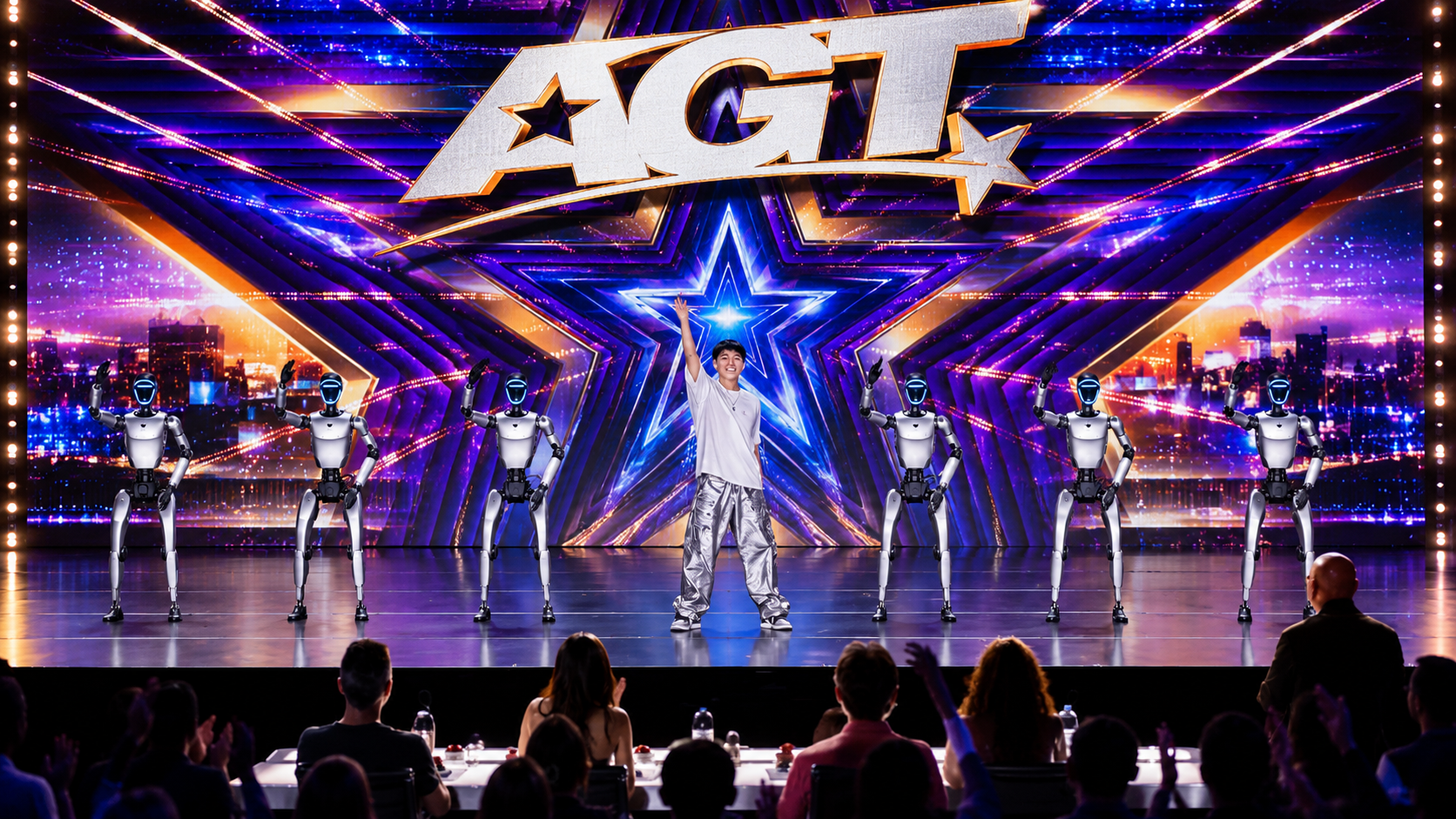
The Unitree robot performance on America’s Got Talent Season 21 absolutely blew everyone away, earning its place as easily one of the most futuristic acts the show has ever seen. In a memorable display that fused human artistry with cutting-edge robotics, the performance captivated both the live audience and the panel of judges, leaving a lasting impression that quickly rippled across the internet. The act represented far more than a simple talent show entry; it offered a vivid glimpse into a future in which advanced humanoid machines can perform alongside people with grace, precision, and even a touch of personality. What unfolded on that stage struck many as a genuine cultural moment, signaling just how far robotics technology has progressed and how dramatically it is beginning to intersect with mainstream entertainment.
At the center of the performance was a 26-year-old street dancer and engineer from Sichuan, China, named Wu Yufei, who also goes by the nickname “Flying Bug.” He took the stage and began with a solo dance set to Lady Gaga’s “Abracadabra,” immediately demonstrating his own considerable talent and charisma. Yet the real shock came moments later, when eight Unitree G1 humanoid robots marched out onto the stage in perfect formation. The sudden arrival of this synchronized robotic ensemble transformed the performance from an impressive solo act into something altogether extraordinary, setting the stage for a spectacle that few in the audience could have anticipated and that none would soon forget.
What distinguished the performance most powerfully was the seamlessness with which the robots integrated into the choreography. Rather than moving awkwardly in the manner often associated with old-school robots, these humanoids blended fluidly into the routine, keeping perfect rhythm with Wu throughout. They locked eyes with the judges in a manner that was both engaging and slightly unnerving, and most impressively of all, they performed highly agile backflips and somersaults right on the stage floor, landing perfectly with zero wobbling. This combination of rhythmic precision and dynamic athleticism showcased the remarkable capabilities of the Unitree G1 platform, demonstrating a level of balance, coordination, and control that would have seemed almost unimaginable in a live entertainment setting only a few years ago.
The judges’ reactions captured the blend of amazement and unease that the performance inspired, reflecting both their admiration for the technology and a certain wariness at how precise and expressive the machines proved to be. Simon Cowell called the act “nuts, but brilliant,” and remarked on how insane it was to have the robots’ mechanical eyes staring directly at him, a detail that underscored the uncanny quality of the experience. Sofia Vergara noted that she had never seen anything like it, observing that it felt like watching real people dance because the robots actually possessed genuine rhythm. Mel B found the act fascinating, though she admitted it was “a little freaky” how perfectly in sync the machines were. She even had the opportunity to interact with one of the robots, named “Jackie,” which showed off some impressive Kung Fu moves, adding a memorable and lighthearted moment to the proceedings.
The outcome of the performance reflected the overwhelming impression it made on the panel, as the act received a unanimous four “Yes” votes from the judges, easily advancing Wu and his robotic crew to the next round of the competition. While the performance did not earn a Golden Buzzer, its impact extended well beyond the confines of the show itself. The act immediately went viral online, drawing millions of viewers and sparking massive debates about the future of artificial intelligence, robotics, and entertainment. This widespread attention highlighted the broader cultural significance of the performance, demonstrating how a single televised moment can ignite far-reaching conversations about the trajectory of technology and its expanding role in everyday life.
The viral response to the performance speaks to a deeper fascination, and occasional ambivalence, that surrounds the rise of humanoid robotics. For many viewers, the sight of machines dancing with such fluidity and expressiveness evoked a sense of wonder at the possibilities that lie ahead, suggesting a future in which robots might take on creative and interactive roles once thought to be uniquely human. For others, the performance prompted reflection on the implications of such rapidly advancing technology, raising questions about how society will adapt as machines grow ever more capable and lifelike. The debates sparked by the act reflect the complex mixture of excitement and apprehension that often accompanies major technological leaps, particularly when those advances are presented in such a visible and emotionally resonant way.
Ultimately, the Unitree robot performance on America’s Got Talent stands as a landmark moment in the convergence of robotics and popular entertainment. By pairing the genuine talent of Wu Yufei with the astonishing capabilities of the Unitree G1 robots, the act delivered a spectacle that was at once entertaining, thought-provoking, and emblematic of the era in which we now live. The unanimous approval of the judges and the explosive online response together affirm the performance’s significance, marking it as a moment that resonated far beyond the stage. As humanoid robotics continues its rapid advance, performances like this one offer a compelling preview of a future in which the boundaries between human and machine creativity grow increasingly fluid, inviting audiences around the world to imagine what extraordinary possibilities may yet unfold.








